- Key Takeaways
- 24-Hour Mobile Repair Scope
- Triage Assessment Protocols
- Roadside Repairs Versus Towing
- Essential Safety Protocols
- Critical Dispatch Details
- Specialized Heavy-Duty Solutions
- Conclusion
- Frequently Asked Questions
- What services are covered under 24-hour mobile repair?
- How does the triage assessment process work?
- When is towing better than a roadside repair?
- What safety steps should I follow while waiting for mobile repair?
- What information should I give when requesting a 24-hour mobile repair?
- Can 24-hour mobile repair handle heavy-duty trucks and buses?
- How fast can a 24-hour mobile repair service usually arrive?
Key Takeaways
- 24 hour mobile repair keeps hardworking trucks and commercial vehicles on the move by addressing many common roadside issues including diagnostics, minor repairs, battery changes, tire changes, and fluid top-ups. They are restricted by safety, fault complexity, and if special tools or parts are needed.
- A lot of battery failures, small air leaks, minor electrical issues, damaged hoses and leaking fluid can be inspected and frequently repaired onsite, saving downtime and the need for towing. Drivers have to be prepared for times when catastrophic failures or inaccessible parts demand a trip to a full-service repair shop.
- Smart triage at the scene of the breakdown assists technicians in making speedy decisions regarding whether to repair on-site or tow by evaluating vehicle condition, fault type and roadside safety. Drivers facilitate this process by explicitly detailing symptoms, prior fixes and their current address when they seek help.
- Safety is still first during any 24 hour mobile repair, so drivers need to use hazard lights, warning triangles or flares and remain inside the vehicle or away from traffic until help is on site. By maintaining a charged phone and adhering to technician guidance, you minimize your risk as you wait, particularly on a busy road or in inclement weather.
- Being specific when you dispatch — vehicle year, make, and model, exact location, symptoms and/or leaks or service lights — allows the repair team to bring the appropriate tools and parts. This prep work typically compresses response time and boosts the likelihood of an effective onsite repair.
- For heavy and commercial vehicles, niche suppliers like Hart Transmission & Mechanical cover both on-the-spot and workshop-based needs, ranging from emergency roadside repairs to in-depth diagnostics and complicated repairs. Fleet operators and truck drivers can appreciate having a provider like this on tap for 24-hour support, from batteries to tires and emergency mechanics.
24-hour mobile repair means that wherever you are, whenever you need it – day or night – phone, tablet, or any other mobile device can be repaired by our technicians. A host of users flock to them when a cracked screen, dead battery, or software glitch prevents them from working, studying, or keeping in touch. The majority of suppliers will conduct repairs on the spot at your home, workplace, or other venue, and a few will provide remote assistance for simple software problems. Response times, service, and costs may differ by provider and region. To be a savvy consumer, you’re likely to look at warranty terms, what kinds of parts are used, or actual customer reviews. The following sections deconstruct how these services operate and what to verify prior to scheduling.
24-Hour Mobile Repair Scope
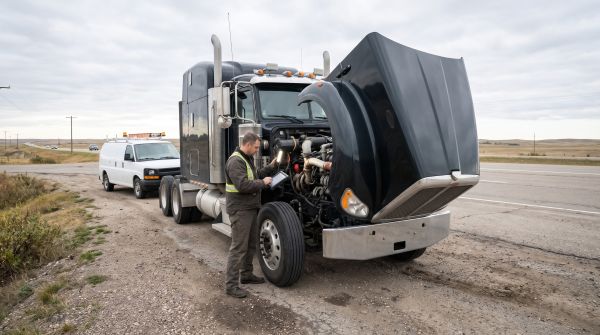
24-hour mobile repair encompasses emergency and scheduled work for passenger cars, vans, and heavy-duty commercial trucks, performed right where they’re parked. It operates twenty-four hours a day, seven days a week, benefiting truckers who pull unconventional shifts or transport cargo from places such as Ottawa to Ancaster, Dundas, Stoney Creek, and Hamilton. We can work at home, at a depot, at a job site, or on the roadside — anywhere that’s safe for the driver and the technician, especially during a late night emergency.
The scope is broad: basic diagnostics, minor and moderate repairs, battery and tire service, fluid checks and top-ups, and some routine maintenance. This saves time and frequently eliminates the need for towing, which is expensive and slow. However, if the defect requires a lift, heavy presses, or high-level scan tools exclusive to a full workshop, the mobile crew either schedules a tow or outsources work to an affiliate garage. Cost varies with the type of repair, distance, and time of day, so most providers quote a call-out fee plus labor and parts, which can be crucial if you’re locked out.
Our mobile technicians operate out of small, fully stocked vans or service trucks and must be self-reliant. They stock frequent parts, on-the-go diagnostics, jacks, stands, air compressors, and lighting so they can perform repairs even in shadowy or isolated areas. Even with good gear, they must weigh safety. Busy highways, poor lighting, or severe weather may rule out complex roadside jobs. Since not all areas offer genuine 24-hour coverage, drivers usually have to hunt for providers who explicitly state that they provide mobile support around the clock and the vehicle categories they repair, such as swapping out my coilovers or returning to stock suspension for the winter.
In general, mobile repair provides a speedier and more convenient alternative for motorists who don’t have hours to kill in a waiting room or who are stranded on the side of the road. It addresses many needs but not every issue, so understanding what’s possible and what’s not onsite helps establish reasonable expectations and accelerates decisions when a disruption strikes at an inopportune moment, especially if it involves diagnosing a problem with your vehicle.
1. Battery Failures
 Mobile mechanics can handle multiple battery problems where the vehicle is parked, which counts when a car or truck won’t start in a driveway, loading dock, or road shoulder. They can jump-start a dead battery, do quick voltage and charging rate checks, and test the health of the battery, starter, and alternator. Many of them have a selection of 12 V and truck heavy-duty batteries, so if it doesn’t kick, they can swap it out right there, no tow needed.
Toolkits often include booster packs, multimeters, and terminal cleaning tools, enabling technicians to identify loose clamps or corroded posts. This is crucial for diagnosing problems that could drain a battery dead overnight. By eliminating guesswork, mobile mechanics ensure that drivers can avoid unnecessary replacements and get back on the road in about an hour, rather than waiting for a tow truck.
If tests indicate more serious charging or electrical issues, such as a failing alternator on a three-battery truck or a sophisticated smart-charging system, the mobile mechanic might pull over at quick fixes. They could fasten wiring, sweep obvious shorts, or make a safe jump-start, then recommend a careful drive to a local workshop or a tow if there is a risk of stalling traffic. In the meantime, while waiting for assistance, motorists should, where possible, get their car off of live traffic, put on hazard lights, and employ warning triangles if available.
2. Air Leaks
On heavy-duty trucks and buses, air systems power brakes and suspension, making it crucial to address any leaks quickly. A 24-hour mobile mechanic can often diagnose issues such as a brake that was still engaged or a leaning suspension, allowing for immediate repairs. This could involve swapping out a broken hose, patching a small line crack, or tightening fittings enough to take pressure until a proper fix at a shop. If you find yourself dealing with a late night emergency, having a mobile mechanic on call can save you time and hassle.
Your technician will typically decide if it’s safe to move the vehicle once pressure builds back to the normal range. They might inquire how fast the air gauge drains with the engine off or on braking. If leakage is slow and repairs hold, they can clear a quick run to a yard or shop for complete work.
If the leak impacts safety-critical components, like primary brake circuits or essential valves, the mobile mechanic will recommend not driving. In those instances, towing safeguards both the driver and other drivers on the road. Before you call, it’s helpful to jot down the symptoms, any dashboard warnings, and your specific location, like a rest area, pit stop, or mileage marker. This specificity slashes diagnosis time and ensures the right parts get to the vehicle on the initial visit.
3. Electrical Faults

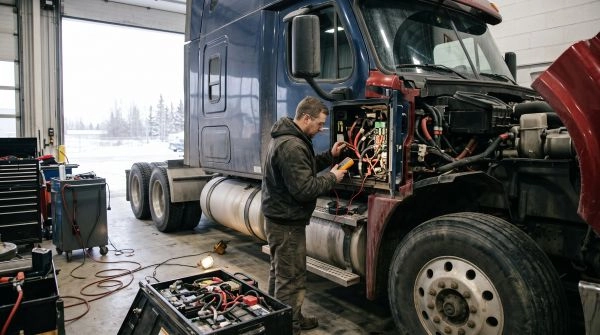
Mobile auto repair encompasses a lot of common electrical issues. Typical cases are blown fuses that kill power windows or wipers, failed bulbs on headlamps or trailer lights, and easy wiring faults that cause a non-working horn or one dead accessory. A mobile mechanic could test circuits, swap fuses, repair damaged connectors and secure loose grounds in a parking lot or on a safe roadside.
Trickier breakdowns can extend outside the typical mobile visit range. If you’re facing a problem where a bunch of systems fail at once or the fault indicates networked control modules, you’ll need advanced scan tools and wiring diagrams from a full workshop. Some mobile mechanics bring along fundamental scan tools, but programming work, module coding, or massive harness repairs are typically best left to a fixed garage.
When booking the call, drivers should provide clear, simple details: which warning lights show on the dash, whether the engine cranks, any loss of power while driving, or if the problem started after rain, a jump start, or a recent repair. This assists the technician in packing the appropriate tools and probable parts before heading out to help with your specific issue.
Certain repairs require specialized parts, such as brand-specific modules, complex switches or custom harnesses that are not carried on a mobile truck. In those instances, the mechanic may stabilize the vehicle, make it safe and plan either a parts order and second visit or a transfer to a partner shop.
4. Damaged Hoses
Hop in the south during the summer in a car with a leaking heater hose and find out how fast you can break down! A mobile mechanic can frequently swap out a standard radiator hose, heater hose, or air line while on the spot if they carry the appropriate size. For fuel lines or less common sizes, they can use safe, rated repair kits to patch small sections just long enough to get the vehicle to a shop. If you’re experiencing a problem with your vehicle, it’s essential to act quickly to avoid further damage.
If damage is limited and the hose is easy to reach, the fix can be fairly quick. Drain or clamp the line, swap the part, refill and bleed the system if needed, then run the engine to check for leaks. When diagnosing issues, if the hoses are not a perfect match, they might make temporary repairs and recommend a complete replacement at a garage as soon as possible.
If the hoses are routed deep in the engine bay, near hot exhaust components or obscured by heat shields, the job may be too dangerous to tackle by the roadside. In these instances, on big trucks with cramped engine spaces, a tow is typically the smarter decision. Motorists can assist by recording before breakdown such odors as gasoline or sweet coolant, steam from under the hood, or gauge indication of overheating.
Providing this brief symptom list and where drips land on the ground saves diagnostic time. A photo of the leak area, if safe to capture, can assist the mobile mechanic prepare tools and parts before leaving the base. This preparation is crucial, especially if you find yourself in a late night emergency situation.
5. Fluid Leaks
Mobile repair teams can manage a lot of liquid leak problems if discovered early. For instance, they’re able to track down engine oil leaks from loose filters or drain plugs, top up oil, and tighten components to prevent additional loss. They can check for coolant leaks from clamps or tiny hose cracks, and top up coolant or water in proper mix ratios for a short drive. If you ever find yourself in a late night emergency, these teams are invaluable. They may also fix slow transmission or power steering leaks by sealing lines or fittings and filling up fluids to safe totals.
If leaks are heavy, continuous, or spilling from critical elements such as engines, gearboxes, or differentials, the danger of significant harm escalates fast. In those instances, a mobile mechanic will typically prevent the driver from restarting the vehicle, since driving an engine with insufficient oil or coolant can cause it to seize or overheat. These underlying troubles tend to indicate worn seals, cracked housings, or internal defects that require workshop tools and hours. For example, if you’re swapping out my coilovers, it’s crucial to ensure there’s no underlying damage beforehand.
Drivers can minimize the chance of catastrophic damage by monitoring fluid levels via dipsticks, expansion tanks, and warning lights, and by steering clear of extended drives once a leak is detected. If it leaks onto a paved surface, containing oil or coolant with absorbent pads, sand, or even old cloths diminishes environmental footprint and makes clean-up easier when the technician gets there.
A 24-hour mobile repair scope comes in handy here, as leaks don’t pay attention to business hours. It provides a quicker reaction when a rig starts to drip in the middle of the night or at dawn on a lot or rest stop. Availability varies by region and not every provider is 24/7, so it’s smart for fleet managers and daily drivers alike to maintain current contact lists for mobile services covering their regular routes and vehicles.
Triage Assessment Protocols
Triage assessment protocols in 24-hour mobile repair give structure to what could be a chaotic roadside event. The aim is to sort risk, understand the fault, and choose the best use of time, tools, and people. This is similar in spirit to medical triage, where a clear process cuts delay and helps focus on the most urgent needs first.
At the scene, technicians first read three things in parallel: the breakdown, the vehicle condition, and the roadside setting. They check for fuel leaks, smoke, warning lights, and obvious signs of previous damage or patch jobs. They scan the surroundings: lighting, traffic speed, lane width, weather, and space to work. A safety-first approach is nonnegotiable here. Good protocols make safety the first filter so they prevent secondary crashes and keep the technician out of traffic flow as much as possible. In others, sophisticated algorithms support this long before the truck rolls, leveraging information from the call to score risk within seconds and deliver immediate direction to the crew.
A well‑run triage follows a simple but strict flow:
- Confirm exact location, vehicle type, and load
- Check immediate safety risks to driver, passengers, and traffic
- Secure the scene with beacons, cones, or hazard lights
- Collect fault details and dashboard warnings
- Review any recent repairs or recurring problems
- Run basic tests with diagnostic tools and meters
- Judge if repair is safe and realistic at roadside
- Decide on onsite repair, temporary fix, or tow
- Document findings for future visits or warranty work
Call center or app intake is triage as well. Transparent information around triage at this point frequently determines how seamless the appointment will be. Drivers help most when they share simple, concrete facts: what the vehicle did before it stopped, what error icon or text showed on the display, whether the same fault happened last month, and if any parts were changed. Pictures of the dash, tire, or engine bay add even more points. Armed with this data, predictive analytics and smart routing can pair the right technician, stock the van with the most likely parts, and increase the chances of a first-call fix. Leading services that use this type of triage protocol and come equipped with a complete diagnosis and repair toolkit typically achieve over 85 percent first-call resolution and reduce unnecessary tows and ER visits by double-digit percentages.
Roadside Repairs Versus Towing
The real choice in a 24-hour mobile repair call is simple: fix the problem where the vehicle sits or move the vehicle to a workshop. Both avenues have obvious boundaries and dangers.
Roadside repair is typically the speedier and less stressful choice. Work is done right at the breakdown location, eliminating the additional time of loading, transporting, and waiting at a shop. A lot of mobile units can change your tires, replace your battery, fix some basic brake components, and address some wiring issues on location. Take, for instance, a van with a flat tire on a city ring road or a delivery truck with a loose battery cable in a warehouse yard — both can typically be fixed in less than an hour, with no tow required. That saves money because there’s no towing fee and less downtime, which counts for private drivers as well as fleets.
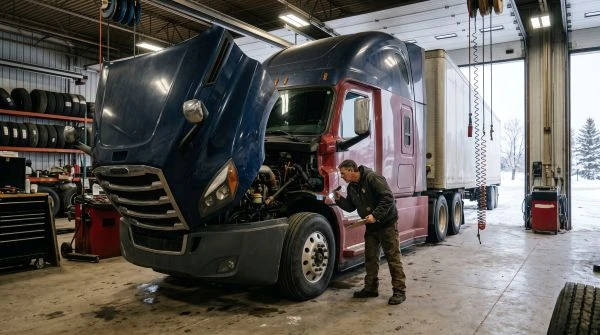
After all, not all breakdowns can or should be addressed by the side of the road. Major engine damage, transmission failure, or serious brake system issues almost invariably require towing to a full workshop, where lifts, test rigs, and specialist tools are on tap. Attempting to perform a deep engine strip-down or ABS overhaul on the shoulder of a highway is not only incredibly slow and costly, it can be unsafe. In winter, towing itself becomes harder. Icy roads raise the risk of extra vehicle damage, and tow trucks may take longer to arrive. At times, a quick roadside repair, such as removing ice from a sensor or replacing a worn belt, can be safer than a long tow in inclement weather.
Technicians weigh three things: the fault, the place, and the gear they have. Hazardous spots, such as blind bends, narrow bridges, or high-speed lanes with heavy traffic, generally require a tow even for small issues. This is consistent with Alberta’s guidance for vehicle mechanical problems, which advises drivers to stop in a safe location where possible and avoid attempting roadside repairs on crowded or fast-moving highways.
| Issue type | Typical roadside repair? | Usually needs towing? |
|---|---|---|
| Flat tire or damaged wheel | Yes | Rare |
| Dead battery / bad connection | Yes | Rare |
| Minor brake parts (pads, fluid, lines) | Often | Sometimes |
| Complex brake failure (ABS, hydraulics) | No | Yes |
| Simple wiring / light faults | Yes | Rare |
| Major wiring or control unit failure | Sometimes | Often |
| Overheating from hose or belt failure | Often | Sometimes |
| Major engine or transmission damage | No | Yes |
Essential Safety Protocols
Safety in 24 mobile repair impacts not only drivers stranded on the road but also repair teams dispatched to assist. The goal is to cut risk in three main areas: traffic, tools and equipment, and emergencies. For drivers, clear signals count. On a highway or a fast-paced city street, a vehicle that’s stopped can cause a domino effect of collisions if others don’t spot it in time. Warning devices and hazard lights help alert approaching traffic to a roadside breakdown. For instance, if a driver is experiencing a late night emergency with their VW Jetta, it’s crucial that they signal their situation effectively. Drivers passing stopped roadside vehicles with flashing lights must follow Alberta’s roadside worker safety rules, including moving over when safe or slowing to 60 km/h or the posted speed limit, whichever is lower.
- Park as far from moving traffic as possible
- Activate hazard lights and deploy warning triangles or flares.
- Remain in the car or stand far off the road.
- Keep a charged phone and power bank within reach
- Share your exact location with the repair service
- Carry a first-aid kit in the car and be aware of what is in it.
For mobile repair teams, safety protocols have to be more formal. For example, firms should designate fire marshals or first responders on every shift so that it is immediately clear who assumes control in a crisis. All employees handling batteries, fuels, and cleaning agents should be trained in first-aid and CPR techniques, especially when diagnosing issues like a parking brake that was still engaged. An emergency plan in writing covers first aid steps, local emergency numbers, clear evacuation routes from workshops and depots, fire safety steps, and where chemical spills go. Dangerous substances like solvents or fuel need to remain in adequate cabinets, with no more than a day’s supply exposed to reduce the danger of contact.
For mobile repair teams, safety protocols have to be more formal. For example, firms should designate fire marshals or first responders on every shift so that it is immediately clear who assumes control in a crisis. All employees handling batteries, fuels, and cleaning agents should be trained in first-aid and CPR techniques and emergency eyewash stations. An emergency plan in writing covers first aid steps, local emergency numbers, clear evacuation routes from workshops and depots, fire safety steps, and where chemical spills go. Dangerous substances like solvents or fuel need to remain in adequate cabinets, with no more than a day’s supply exposed to reduce the danger of contact. Fire extinguishers should be inspected monthly to ensure they are charged, accessible, and suited to potential risks. Always have your technicians wear gloves, eye protection, and safety shoes when working around moving parts, sharp edges, or hot surfaces. Never work under a car that is on just a jack; you need solid jack stands rated for the vehicle’s weight to prevent it from collapsing on you and causing serious injury.
Critical Dispatch Details
It’s precise dispatch that allows 24 hour mobile repair to feel fast, not slow and stressful. The individual who answers your phone or online inquiry relies on the information you provide. The more specific you are, the simpler it is for the team to dispatch the appropriate unit with the appropriate gear within the appropriate time frame.
Most modern dispatch centers track their units in the field, so once a unit is assigned, we get location updates every minute and you can sometimes see a live ETA. Certain providers aim to answer within 15 minutes of your query. That objective is always situational to your location and availability of units. A congested expressway outside a metropolitan area with a 24/7 fleet in operation will seem a lot different than an isolated country lane after dark. Response time is never a single number, so the work is to trim unnecessary lag, and that begins with your initial outreach.
Such precise information molds what type of truck or van rolls out. For a car bogged in mud or down a small ditch, they might dispatch a winch-equipped rig. For a locked car in a secure parking lot, a diminutive service vehicle might be sufficient. In a bona fide emergency, most centers follow a more rigid protocol, mark the job as urgent, and will likely request that you contact local emergency personnel if anyone is injured. In less urgent situations, like a flat on a closed lot, they might prioritize the job differently but still text or app you live updates.
To help dispatch work well, keep these core details ready and share them in this order:
- Precise location in metric and easy-to-identify landmarks (for example, “2 kilometers east of Exit 5, north side, by the blue fuel station sign”) or the exact map pin from your phone.
- Manufacturer and model, year, color and fuel type, plus any add-ons that count, like a roof box, long trailer or extra-low sports body.
- Flat symptom and what you observe, like ‘battery dead no lights no crank,’ ‘front left tire burst, car on level ground,’ or ‘engine hot steam from front, I stopped right away.’
- Safety context includes traffic speed, light level, weather, and whether the vehicle is blocking a lane or is safely in a side area.
- Your full name and two contact numbers if possible, so they can get to you if data drops or a call fails.
- Any deadlines or special requirements include “small child in car,” “solo at night,” and “need tow, not roadside fix.
Solid dispatch transforms a terrible breakdown into a controlled delay.
Specialized Heavy-Duty Solutions
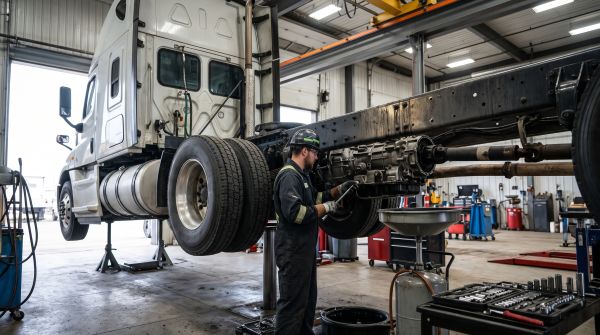
Specialized heavy-duty backing in a 24-hour mobile fix-it shop translates to large trucks and commercial equipment being worked on with the same attention you’d anticipate in a quality workshop, delivered curbside, to the jobsite, or to the equipment yard. Hart Transmission & Mechanical is your trusted heavy-duty mobile mechanic and onsite repair provider in Sherwood Park for trucks, trailers, and commercial fleets. The company also provides heavy-duty truck repair for vehicles that need more extensive workshop diagnosis and repair. Hart serves construction, oil and gas, and freight operations, where one stalled unit can halt an entire line of work.
Hart’s roving team is prepared to perform diagnostics, urgent fixes, and on-the-spot evaluations for numerous models of commercial vehicles and trucks. They utilize computerized diagnosis tools that connect into cutting-edge truck systems, retrieve fault codes, and monitor live data for the engine, transmission, brakes, and emission controls. For example, a tractor unit that throws an engine warning at 02:00 can be scanned on the side of the road, with the mechanic checking fuel pressure, sensor input, and exhaust system data without towing it to a shop. If a problem arises, such as a brake that was still engaged, they can quickly diagnose and address it right there.
Hart’s roving team is prepared to perform diagnostics, urgent fixes and on-the-spot evaluations for numerous models of commercial vehicles and trucks. They utilize computerized diagnosis tools that connect into cutting-edge truck systems, retrieve fault codes and monitor live data for the engine, transmission, brakes and emission controls. For example, a tractor unit that throws an engine warning at 02:00 can be scanned on the side of the road, with the mechanic checking fuel pressure, sensor input and exhaust system data without towing it to a shop. When required, they service hydraulics, like lifting jacks on dump trucks or crane stabilizers, with pressure gauges, test blocks and seal kits meant for heavy loads.
This division reduces transport costs, minimizes downtime, and decreases the danger of hazardous ‘limp home’ journeys. Hart urges operators, drivers, and fleet managers in Sherwood Park to call the moment an issue arises, not when it fails and risks bigger repair bills, rental expenses, or even breakdown-caused accidents. Keeping your vehicle in top shape can prevent the need for swapping out my coilovers or dealing with a locked-out situation.
For those who find themselves in a predicament, like being locked out late as 1am, Hart’s team is ready to assist. They understand the urgency of such situations and work diligently to get the door open as late as 1am in the morning without any damage, ensuring you’re back on the road as soon as possible.
Conclusion
24-hour mobile repair provides obvious assistance in tough locations. A truck pulls in after hours on a deserted road. The van won’t start in heavy rain. The kids’ bus breaks down on a hill. In all instances, a quick call and good triage processes can reduce stress and downtime.
Clear facts are what count. Tell us the straight location, truck variant, cargo, and defect indicators. Tread carefully as you wait. Knowing the difference between a speedy road fix and an intelligent tow is important.
For your next breakdown, remember one thing. Be safe first, then call a trusted 24-hour mobile repair team and provide clear information so they can assist you quickly.
Hart Transmission provides roadside assistance as well as garage repairs if the breakdown is too complex. A flat tire on a loaded trailer, a dead battery on a delivery truck, or a minor air leak in a brake line can often be repaired onsite with specialized jacks, torque tools, and mobile compressors. For trailer issues that require more extensive workshop attention
Hart also offers heavy-duty trailer repair Jobs requiring a lift, full engine tear-down, or major driveline work instead need to be handled at the main garage, where heavier tooling and test rigs are available.
Frequently Asked Questions
What services are covered under 24-hour mobile repair?
24-hour roadside assistance typically encompasses fault finding, quick fixes, and diagnosing issues like a parking brake that was still engaged. This service is crucial during a late night emergency, especially when swapping out my coilovers to my stock suspension.
How does the triage assessment process work?
The dispatcher queries critical questions on symptoms, warning lights, sounds, and location. A technician then diagnoses the probable problem, such as a parking brake that was still engaged, remotely. Based on this triage, they determine what tools to bring for a late night emergency.
When is towing better than a roadside repair?
Towing is best if the car is not drivable due to significant engine or brake failure, such as a parking brake that was still engaged, or if there are advanced electrical issues. In cases like a late night emergency, where I couldn’t do the full swap myself, towing is suggested.
What safety steps should I follow while waiting for mobile repair?
If you’re locked out of your VW Jetta during a late night emergency, pull your car off the road if possible. Hazards on. If you have them, throw out those warning triangles or cones. Get out of traffic, preferably behind a guard rail, and leave lights on for the tech to see while you await their directions by phone.
What information should I give when requesting a 24-hour mobile repair?
Please give me your location, the make and model of your VW Jetta, any visible damage or leaks, dashboard warning lights, and any smells or sounds. If you are locked out of your VW late at night, send us your location to aid quicker and more secure shipping.
Can 24-hour mobile repair handle heavy-duty trucks and buses?
There’s lots of providers with heavy-duty solutions for diagnosing problems. These consist of mobile units equipped with more powerful tools, including those useful for swapping out my coilovers or addressing a late night emergency with my VW Jetta.
How fast can a 24-hour mobile repair service usually arrive?
After a late night emergency with my VW Jetta, I managed to get the door open as late as 1am, but I couldn’t do the full swap myself from my coilovers to my stock suspension for the winter due to diagnosing a problem with the parking brake that was still engaged.