- Key Takeaways
- Service Intervals by Transmission Type
- Factors Reducing Fluid Lifespan
- Heavy-Duty Transmission Service Elements
- Modern Fluid Degradation Analysis
- Symptoms of Failing Components
- Professional Mechanical Solutions
- Conclusion
- Frequently Asked Questions
- How often should a heavy-duty transmission be serviced?
- What factors cause heavy-duty transmission fluid to wear out faster?
- What is included in a heavy-duty transmission service?
- How is modern transmission fluid degradation analyzed?
- What are common signs of failing heavy-duty transmission components?
- Can heavy-duty transmission problems be fixed without a full rebuild?
- Why is professional heavy-duty transmission service important?
Key Takeaways
- Match heavy-duty transmission service intervals to the system type — manual, automated manual or full automatic — and always adhere to the OEM schedule instead of applying a one-size-fits-all interval. It keeps performance where it belongs, maximizes component life and minimizes surprise downtime.
- Adjust fluid and filter service intervals to actual operating conditions such as payload, route elevation changes, and ambient temperature. Heavier loads, steep routes, and high heat reduce fluid life and demand more frequent inspections and changes.
- In every heavy-duty transmission service, include fluid and filter replacement, magnetic inspection for metal particles, and inspection of linkage, gears, seals, and gaskets. Recording every maintenance factor supports warranty care and long haul maintenance scheduling.
- Utilize fluid condition as your stethoscope for health, checking for contamination, viscosity, color, and chemical breakdown. Use fluid analysis and perform predictive maintenance to schedule repairs before catastrophic failures.
- Be on the lookout for common failure indicators like gear slip, shift delay, strange noises, warning lights, or discolored fluid and take action when they show up. Early diagnosis and repair lessen the potential for expensive transmission damage and downtime for your vehicle.
- Trust certified transmission experts with OEM-approved fluids, components and diagnostic equipment for heavy-duty transmission service. Keeping trucks reliable, safe and productive in demanding operating environments means scheduling regular professional inspections and preventive maintenance’
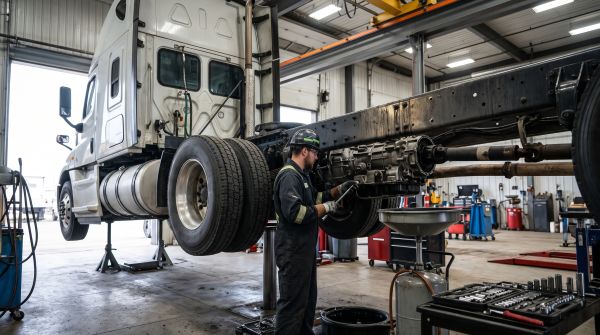
Heavy-duty transmission service is the scheduled maintenance and overhaul performed on transmissions in semi-trucks, buses, large passenger vans, and other high-load vehicles to maintain them secure, smooth, and dependable. This includes fluid changes, filter swaps, software checks, and even full inspections of clutches, gears, seals, and cooling systems. Many fleets and owner-operators have exacting service intervals as transmissions in heavy service encounter high heat, long hours, and repeated towing or hauling. Hard shifts, slipping, bad fuel use, and early failure cost far more than routine work — missed service. In the following portions of the guide, he details what heavy-duty service covers, when it’s due, and how shops process it in a simple, step-by-step explanation.
Service Intervals by Transmission Type
Service intervals for heavy duty transmissions vary widely with design, duty cycle, and fluid type. Manual, automated manual, and full automatic units load their components and lubricants differently, so each needs its own schedule, not a shared ‘average’.
1. Manual Systems
Manual heavy-duty transmissions generally require fluid changes around every 30,000 to 50,000 miles (about 48,000 to 80,000 km) to keep shift feel smooth and protect gears and bearings. In serious duty, like heavy towing or off-roading, many fleets shift toward the 30,000 mile mark, while long, consistent highway runs can even support that range’s upper end when clean, premium oil is employed. Short, cheap top-offs don’t replace this baseline service need.
Manual units tend to have much longer intervals between major service than automatics. They’re not ‘set and forget.’ Filters, if fitted, and seals should be checked at least every 30,000 to 60,000 miles to coincide with typical fluid change intervals, particularly where dust, mud, or big temperature swings are prevalent.
Linkage inspection is easy to skip and expensive to ignore. Worn bushings, stretched cables, or misaligned linkages can mimic internal transmission damage, induce hard shifts, or prevent full gear engagement under load.
Drivers and techs should monitor for leaks at the input shaft, output shaft, and side covers, as well as any new whine, grind, or clunk noises. Oil on the housing or under the truck, or a gearbox that ‘hangs’ between gears indicates it is time to service the unit before a gear or bearing fails.
2. Automated Manual Units
Automated manual transmissions (AMTs) fall in between manual and automatic designs. They have a manual-style gearset but use actuators and control software to shift. Fluid and filter intervals still follow manual patterns, but often with tighter limits. Many OEMs connect AMT fluid changes to 30,000 to 60,000 miles under mixed use, with severe duty more towards the low end. Where manufacturer-approved synthetic oils are employed, certain systems permit stretches into the 60,000 to 100,000 mile range, but only if the duty cycle aligns with OEM assumptions and oil analysis remains in range.
Clutch control hardware and the electronic shift mechanism should be inspected during every service. Techs need to check the clutch actuator, wiring and connectors for heat or moisture damage and confirm that shift motors and solenoids sweep through their full range. Even the slightest bit of extra resistance in this area can translate into missed shifts once the unit is hot or under heavy load.
Delayed engagement, hunting between gears, or feeling like the truck is “slipping” even when the engine speed is consistent typically indicate clutch actuation or shift logic issues. These symptoms should prompt a deeper inspection instead of just a fluid change, as software errors or worn hardware can rapidly damage synchronizers or clutches.
Even modern AMTs wouldn’t be possible without both updated software and the right calibration. OEM maintenance plans often comprise firmware updates, clutch ‘learn’ routines, and adaptation resets at specific mileage intervals or following clutch replacement. Skipping these while just doing oil and filter changes can leave a truck with new parts but poor shift quality and increased wear.
3. Full Automatics
Full automatic heavy-duty transmissions push their fluid harder than manuals and AMTs because the torque converter and hydraulic controls generate heat, particularly in stop-and-go traffic or while towing heavy trailers. For city driving with constant stop and go, most manufacturers suggest servicing near 50,000 miles. For severe use like heavy towing, steep climbing, or off-roading, reducing to about 30,000 miles is typical to prevent fluid degradation. For steady highway use, where oil temperatures are stable and shift cycles lighter, service intervals can creep closer to 75,000 miles. Some line-haul units under perfect conditions and with OEM synthetic fluids might even achieve very long lubricant intervals, monitored by oil analysis.
Hybrids or electric automatics with integrated drivetrains can stretch intervals even further, sometimes up to 100,000 miles, as electric motors help smooth torque delivery and reduce heat load. Even then, the OEM schedule should drive decisions, not an educated guess. Depending on a one-size-fits-all distance across mixed fleets tends to leave the hardest-worked automatic units under-serviced.
With every automatic service should come a close inspection of pan gaskets, cooler lines and shaft seals. Small leaks reduce fluid level, increase operating temperature and accelerate wear in clutches and valves. It’s time to be on the lookout for warning signs like hard shifts, gear flares, warning lights on your dash, or subtle whines and buzzes that grow in intensity with either road speed or throttle. These early warnings tend to be FAR cheaper to fix than the failure they indicate.
Fluid choice is as important as timing. Like many automatic transmissions, certain manual transmissions, too, call for a small, limited band of approved oils. Stepping outside those lists can alter friction properties just enough to disrupt shift feel or reduce clutch life. Using manufacturer-specified or approved synthetic fluid alone and co-synchronizing filter changes to 30,000 to 60,000 mile windows provides the best opportunity to keep performance, fuel consumption, and reliability near design targets over distance.
Factors Reducing Fluid Lifespan

Transmission fluid doesn’t get old on a clock. Its life varies with heat, load, terrain and day-to-day habits, so service schedules must track actual conditions, not just mileage or hours.
- Heavy payloads lead to more gear load, higher temperatures, and faster fluid breakdown.
- Steep or stop-and-go routes result in constant shifting, extra wear, and higher thermal stress.
- Extreme heat causes fluid to thin, lose film strength, and raise the risk of failure.
- Extreme cold: Fluid thickens, slows flow, and provides poor lubrication at start-up.
- Poor cooling: Heat buildup is one of the main causes of early failure.
- Long intervals: old fluid loses lubrication and temperature control
- Contamination: Metal particles, dirt, and moisture speed up oxidation and wear.
- Weak maintenance records: No link exists between usage patterns and fluid condition.
Contaminated or degraded fluid stops doing its core jobs. It no longer lubricates well, it carries less heat away, and it cannot keep friction material and valves clean. This increases the likelihood of slipping clutches, hard shifts, delayed engagement, and eventually, internal damage to gears, bearings, seals, and control bodies. Service intervals should be adjusted to the real operating picture: payload, route, climate, and duty cycle. Jotting down those specifics — average load, typical terrain, temperatures, and seasons — assists in formulating a plan that shields the transmission rather than guessing based on miles alone.
Operating Payload
- Document normal and maximum payload capacities, not just GVWRs. Increased payloads increase internal pressure and heat on gears, clutches, and converters that accelerate fluid oxidation and put additional stress on seals and gaskets that have to maintain pressure under that load. This is particularly critical in hot summers, when thin fluid may fail to maintain a stable film between moving components.
- When trucks haul close to max weights all the time, reduce fluid service and inspection intervals because transmission fluid degrades more rapidly under constant high torque and repeated starts on grade or in congestion.
- Be on the lookout for slipping gears, delayed under-load upshifts, shudder on take-off, or rising transmission temperatures — signs that old fluid has lost its grip and cooling capacity.
- Add payload notes to maintenance records, such as average load bands and duty cycles, so you can associate higher loads with more rapid fluid aging over time.
Route Topography
| Factor | Flatland Routes | Mountainous / Hilly Routes |
|---|---|---|
| Gear shifting frequency | More stable, fewer large ratio changes | Frequent gear changes, engine braking, downshifts |
| Thermal stress on fluid | Lower, more consistent temperatures | Higher, repeated heat cycles and peak temperatures |
| Brake and driveline load | More even | Higher downhill load, risk of heat buildup |
| Service interval tendency | Closer to baseline recommendation | Should be shorter and more condition‑based |
| Inspection focus | General wear and leaks | Linkage, gears, and fluid for heat and mechanical stress |
On flat or rolling courses, fluid temperatures tend to remain in a steadier band, so oxidation is slower and wear metals can accumulate at a lesser pace. Trucks that operate in mountainous or steep hill terrain experience constant shifting, extended climbs with heavy torque, and extended descents using engine braking that increase fluid temperature and stress in the transmission case. These trucks require more frequent inspections of the shift linkage, gears, and fluid quality, particularly color, odor, and particle content.
Thermal Stress
Elevated operating temperatures accelerate fluid oxidation and degradation, which compromises lubricating films, damages friction modifiers, and diminishes the fluid’s capacity to dissipate heat from vital components. Heat buildup is a top culprit of early transmission death, and repeated high heat exposure leaves seals, gaskets, and plastics brittle or distorted. Old transmission fluid can go bad over time even in light use, losing its lubricating properties and its ability to maintain internal temperature within a safe range.
Service teams need to schedule more frequent fluid inspections and changes during hot seasons, in hot climates or severe-duty cycles like towing, steep grades or stop-and-go city traffic. Hot summers thin out fluid so it loses protection and freezing winters thicken fluid to move sluggishly at start-up, starving some parts of lubrication until the unit warms up. Temperature extremes, hot and cold, upset viscosity and overall fluid performance. Seasonal temperature shifts can put added strain on the entire system. Checking for overheating warning lights, verifying that coolers, fans and lines are working fine and inspecting seals and gaskets for heat-related leaks during every service all help keep fluid healthier longer, even when driving conditions, vehicle use and habits would otherwise shorten its life.
Heavy-Duty Transmission Service Elements
Heavy-duty transmission service targets components that shoulder high torque and heat during full loads, regular towing, and extended run times. Experienced mechanics inspect and record every component so the system remains under warranty and is secure to operate.
| Service Element | What It Covers | Why It Matters |
|---|---|---|
| Fluid Replacement | Drain, refill, leak checks, fluid specs, temperature impact | Controls wear, heat, and shift quality |
| Filter Renewal | Filter change, debris check, seal fit | Protects gears, bearings, and valves from particles |
| Magnetic Inspection | Plug/pan check, metal trend tracking, repair planning | Finds early gear/bearing damage before failure |
| Linkage, Seals, Gaskets | Wear, misalignment, leaks, water entry | Keeps control precise and fluid clean and contained |
| Documentation & Reporting | Logs, reports, warranty records | Supports compliance, resale value, and service planning |
Complete service incorporates visual inspections of the shifter linkage, gear teeth when exposed, breather caps, and all seals and gaskets. Breathers and seals assist in blocking water during routine operation. Off-road or wet work sites stress them, requiring careful examination. Every step should be logged: parts used, torque values if applied, fluid brand and grade, and any abnormal findings.
Fluid Replacement
Fluid replacement begins with a complete drain allowing old oil, sludge, and moisture to exit. Heavy-duty usage typically requires SAE 50 or SAE 60 fluids to maintain sufficient film strength on gears and bearings, particularly under high loading. In harsh fleets, military-style MIL-PRF specs could guide fluid selection for added stability at extreme temperatures or shock loads.
OEM-approved fluid is key, as the wrong friction profile or viscosity will trigger harsh shifts, delayed engagement or clutch slip. Standard drain intervals run 500 to 2,000 hours, but that window shifts with the real conditions. Towing, heavy loads, cold starts and winter stop and go can all shorten that interval compared to steady highway runs at light load.
Heat control is included in fluid service. Every 18°F (10°C) increase doubles the speed at which the fluid degrades. Blocked coolers, fouled fins, or low fluid levels appear as reduced fluid life and darker oil. Technicians commonly employ portable filter carts to pre-filter new fluid while transferring. This reduces the chance of debris entering a newly serviced unit and assists massive fleets in maintaining a cleaner baseline across numerous vehicles.
When refilling, the tech checks for leaks at pan gaskets, output seals and cooler lines, repairing vulnerable areas before they become significant fluid loss. For owners who tow more than 50 percent of the time, a full transmission inspection every 48,000 to 80,000 kilometers (30,000 to 50,000 miles) helps catch heat damage early. All fluid changes need to be recorded in the maintenance log book, with date, hours or kilometers, type of fluid, quantity and any notes about color, smell or overheating.
Filter Renewal
Filter replacement goes hand-in-hand with fluid changes to keep grit from getting into narrow internal pathways. In heavy-duty units, plugged filters can starve clutches and bearings of oil in a short time under load.
Techs take out the old filter and inspect for metal flakes, fiber, or burnt clutch. Fine silver powder can indicate gear or bearing wear, while black, soot-like material can indicate overheated clutch packs that require closer examination.
Proper fit of the new filter counts. A loose seal or misaligned pickup can introduce air or oil that can bypass the filter. Several shops consider filter renewal and fluid replacement one combined service step for better protection and easier scheduling.
Magnetic Inspection
Magnetic inspection utilizes magnets embedded in drain plugs or drain pans to catch any fine steel particles from normal wear. In a healthy transmission, the magnet film will be thin and fairly uniform, without big chunks or sharp flakes that can be felt.
When a technician observes heavy build-up, needles or flat chips, it can indicate early bearing, synchro ring, or gear tooth failure. Those findings enter her service report so the owner or fleet manager can follow changes over time and schedule repairs in advance instead of waiting for a roadside breakdown.
If metal levels spike from one service to the next, the shop may recommend pulling the unit for teardown, oil sampling or just more frequent monitoring on that particular vehicle. In more valuable fleets, this trend data connects to a larger maintenance software to align problems with driver behaviors, routes, or loads.
Modern Fluid Degradation Analysis

Modern fluid degradation analysis – tracking how the transmission fluid ages so it still protects gears, bearings, and clutches instead of helping wear them out. In long-haul and stop/go duty cycle heavy-duty trucks, this is probably one of the most valuable tools to schedule service and prevent unexpected breakdowns.
- Viscosity (thickness at set temperatures)
- Oxidation level and acid number
- Presence of wear metals (iron, copper, brass, bronze, aluminum)
- Contamination (water, dirt, coolant, fuel, soot)
- Additive depletion (anti-wear, friction modifiers, antioxidants)
- Presence of sludge or varnish precursors
- Particle count and size distribution
In the field, a technician draws a fresh sample at service and submits it to a lab. The report indicates the distance the fluid has traveled from its point of origin. If viscosity has dropped, it might not maintain a robust film between gear teeth. If it’s too thick, cold shifts beat up and components hunger for oil on start-up. Chemical markers indicate oxidation, which rises rapidly once fluid experiences prolonged temperatures above roughly 180°F (82°C). A simple rule many fleets use is that every 18°F (10°C) rise above the ideal range can roughly double the rate of fluid breakdown. A unit that runs hot at 210–220°F for mountain work will degrade its oil much faster than one that cruises flat at 170–180°F.
Lab tests reveal what’s wearing on the inside as well. Iron frequently indicates gear or shaft wear. Brass or bronze debris might emanate from synchros or bushings. Aluminum suggests case or pump problems. Coolant or water could indicate a blown cooler or seal. Armed with this information, service planners transition from rigid drain rules to predictive maintenance. Rather than swapping all trucks at 500 hours, a fleet could establish ranges from approximately 500 to 2,000 hours, linked to load, routes, and temperature, then adjust by sample results. Units operated in extreme hot or cold regions typically require more frequent intervals, and hour or kilometer-based scheduling generally corresponds to actual wear more effectively than a basic calendar date. For older transmissions with heavy sludge, a lot of shops rely on these reports to determine that a mild drain-and-fill is safer than an all-out high-pressure flush, which can hustle loose deposits and trap them in sudden valve or passage clogs.
Symptoms of Failing Components
Hard-working transmissions don’t typically crash without symptoms. Attentive drivers and fleet managers are able to recognize small changes early and schedule service before a unit overheats, shreds metal, or requires a complete rebuild.
- Pay attention to new noises like whines, grinds, or dull clunks in Park, Drive, or Reverse. These noises typically indicate worn bearings, gear damage, or loose internal components.
- Sense new vibrations through the shifter, floor, or seat, particularly when under load or on grades. Vibration can be caused by misaligned driveline parts, failing mounts, or internal imbalance.
- Note any change in shift quality: hard shifts, especially into first or reverse, can signal bad synchronizers, clutch drag, or linkage problems.
- Consider any hesitation to shift, even a one- or two-second hesitation. Suspect it, as it can indicate low pressure, sticky valves, or worn clutches.
- Observe dashboard transmission or check-engine lights. These are first-line electronic warnings that something in the control or hydraulic system is out of range.
- Inspect for leaks under the vehicle and around coolers and lines. Uncommon fluid levels typically can be traced towards failing seals, cracked housings or cooler problems.
- Inspect fluid color and smell: Brown or dark fluid or a burnt smell points to heat, oxidation, or clutch wear. Milky fluid usually means coolant contamination.
- Keep an eye on operating temperature. Excessive heat build-up is one of the transmission’s clearest signals that it’s slipping, overloaded, or otherwise starved for cooling.
Prompt inspection whenever any of these symptoms show up typically costs far less than roadside breakdowns or complete transmission replacement.
Gear Slip
Gear slip occurs when engine speed increases but road speed doesn’t or when the truck pops out of gear while under load. This generally stems from worn clutches, damaged bands, low or incorrect fluid, or pressure loss within the unit. Slipping creates a tremendous amount of heat and can burn clutches within minutes, transforming a potential repair into a full-blown rebuild. Because of this danger, any slip should initiate an instant inspection of fluid level, line pressure, control settings and driveline load. For every heavy-duty transmission service, it’s a good idea to test shifts on a grade or with usual load weight, then document any slip incidents and circumstances in maintenance logs for trend monitoring.
Shift Delay
Shift delay is when you get a lag between selecting a range and feeling the gear engage, or between gears when driving. Even a minor one to two second delay can suggest low fluid, a clogged filter, worn seals or valve body issues that damage pressure build up.
When this appears, a simple inspection should include fluid level and condition, filter blockage, shifter and linkage adjustment, and any retained fault codes. If tests indicate failing internals, then those parts require servicing or replacement to restore crisp, on-time shifts and safeguard the rest of the drivetrain. Repeat lag, even following service, often indicates more significant hydraulic or control problems that necessitate a more thorough teardown or expert examination.
Fluid Discoloration
Transmission fluid is a window into the condition of a heavy‑duty unit. Almost black fluid, or fluid that smells burnt, usually indicates heat stress, oxidation, or clutch material wear. Milky fluid indicates coolant leaking in via a failed cooler or seal. These types of changes typically present with other symptoms such as slipping, harsh shifts, or overheating.
If fluid looks or smells foul, it should be changed. The pan should be checked for junk and the source of heat or contamination located, which could be a plugged cooler, leaking seal, cracked cover, or other issues. All routine services should include a brief color check on the dipstick or sample bottle, and recording these results over time helps identify gradual trends before they lead to failure.
Professional Mechanical Solutions
 Professional mechanical solutions for heavy-duty transmissions begin with actual expertise, not hunches. Professional Mechanical Solutions Hart Transmission & Mechanical builds its work around trained technicians, proven methods, and a shop equipped to handle large commercial trucks and equipment under real-world stress, not perfect lab conditions.
Heavy duty truck transmissions run hot, torque and stop-and-go loads day after day. That combination leads to wear that generic shops frequently overlook: heat-checked clutch packs, worn synchronizers, and hairline cracks in housings. Hart Transmission & Mechanical has an organized process to handle this. Each task starts with a systematic inspection, from fluid condition and codes to road tests and noise checks under load. From there, the crew transitions into more in-depth measures like pressure tests, internal part inspections, and electrical and sensor diagnostics when necessary. It reduces trial-and-error repairs and identifies the root cause, be it a cooling issue, driver habits, or a failed control module.
The Sherwood Park location is configured as a massive, fully equipped shop capable of handling individual or fleets of trucks. That scale is important for fleets that simply cannot have extended downtime. The shop employs specialized scan tools that read heavy duty transmission control units, live data, and fault histories. For the mechanical side, we have dedicated teardown and build work areas, hoists with appropriate capacity, and tools to accurately measure gears, bearings, and shaft play. Repairs use OEM parts or equivalent quality components, ensuring shift quality, durability, and warranty coverage remain as designed. A driver hauling 30,000 kg up steep grades or running long highway routes gets a transmission that can handle that load with smooth, predictable shifts.
Preventive service is integrated into the process, not an afterthought. Hart Transmission & Mechanical promotes scheduled inspections and fluid changes at Sherwood Park based on activity, not just mileage. For instance, a city delivery truck with constant shifting may require shorter service intervals than a long-haul unit that maintains steady speeds. Frequent inspections of fluid level, contamination, cooler operation, seals and mounts help detect issues early and prevent failures that can keep a truck down for days. Schedules like this are key for fleets that monitor cost per kilometer and uptime. By booking your full inspection or truck transmission service well in advance, it is easier to get parts, bay time and staffing lined up, which keeps the visit efficient and gets your truck back in service sooner.
When transmission problems involve engine performance, cooling, or related drivetrain components, working with an experienced diesel repair shop (https://coppertoptruck.com/shop-services/diesel-repair-shop/) can help identify the underlying issue and coordinate the right repairs.
Conclusion
Heavy-duty transmission service requires consistent attention, not guesswork. Get the right fluid, the right service step, and the right schedule that keep those gear shifts clean and that heat in check. Skipped visits have a way of making themselves noticed later in the form of harsh shifts, slip, or loud grind. A basic fluid test or a speedy scan can frequently detect a minor problem before it strikes your wallet hard.
Every rig runs a little different. A long haul truck on flat highways has a different existence than a city dump truck or loaded work van in steep hills. Smart owners track that usage and schedule service to match.
Have a heavy-duty rig that works hard every day. Discuss with a reliable garage and schedule your next comprehensive transmission inspection.
Frequently Asked Questions
How often should a heavy-duty transmission be serviced?
Service intervals vary according to transmission type, load and driving conditions. Most heavy-duty units require fluid and filter service every 30,000 to 60,000 km. Always observe the manufacturer schedule and move up for heavy-duty tasks like towing, hauling or constant stop-and-go.
What factors cause heavy-duty transmission fluid to wear out faster?
High loads and steep grades, hot climates, frequent towing, stop-and-go traffic, and poor cooling all accelerate fluid breakdown. Contaminants such as metal or clutch material shorten fluid life and cause premature transmission wear or failure.
What is included in a heavy-duty transmission service?
A full service typically involves fluid exchange, filter replacement, pan inspection, gasket or seal replacement, and magnet cleaning. Professionals can check coolers, lines, and electrical components and take the vehicle for a test drive to see if it shifts properly under load.
How is modern transmission fluid degradation analyzed?
Shops can employ fluid lab testing, electronic scanners and real-time temperature data. These instruments test for oxidation, contamination, changes in viscosity and wear metals. This data-driven method predicts failures early and accurately sets service intervals for heavy-duty transmissions.
What are common signs of failing heavy-duty transmission components?
Symptoms can be slipping gears, delayed engagement, hard or erratic shifts, overheating, burnt-smelling fluid, strange noises and warning lights on the dashboard. Any of these symptoms ought to be inspected promptly to prevent expensive internal damage and unscheduled downtime.
Can heavy-duty transmission problems be fixed without a full rebuild?
Sometimes, problems from low or degraded fluid, clogged filters, sensors, solenoids, or valve body issues can frequently be repaired without a complete rebuild. A trained technician will run diagnostics first to identify the root cause and suggest the most economical repair.
Why is professional heavy-duty transmission service important?
Heavy-duty transmissions are run with a high stress load and need expert attention. Expert care guarantees the right fluid, precise fill levels, accurate diagnostics, premium parts and more. It helps safeguard costly parts, minimize downtime and increase the service life of vocational and commercial vehicles.