- Key Takeaways
- Heavy-Duty Electrical Problems
- Intermittent Symptoms
- Common Root Causes
- Modern Voltage Drop Diagnosis
- Severe Climate Stress
- Professional Equipment Needs
- Conclusion
- Frequently Asked Questions
- What are common signs of heavy-duty electrical problems?
- Why do heavy-duty electrical issues show intermittent symptoms?
- How does voltage drop affect heavy-duty equipment performance?
- What tools are needed to diagnose modern heavy-duty electrical systems?
- How does severe climate stress heavy-duty electrical systems?
- Can I safely troubleshoot heavy-duty electrical problems myself?
- When should I call a professional for heavy-duty electrical issues?
Key Takeaways
- Heavy-duty electrical issues tend to involve more complex, interwoven systems. Thus, flickering lights, dead accessories, or intermittent power usually mean wiring or connection faults instead of easy part failures. Think of repeated symptoms as red flags of deep-seated issues that, when overlooked, cause downtime and present safety hazards.
- Intermittent things like warning lights that flash on and off, slow cranking, or strange battery drain tend to be loose grounds, harness abrasion, or moisture intrusion. Systematic troubleshooting, not guessing and parts swapping, keeps you from throwing money away and coming back for more.
- They tend to be caused by some of the same root issues, including overloaded circuits, harness abrasion, corroded or loose grounds, damaged connectors, and moisture inside plugs or panels. Routine, hands-on inspections, careful wire routing, and shielding from vibration, heat, and chafing go a long way toward preventing breakdowns.
- Voltage drop testing is a secret weapon diagnostic process that exposes sneaky resistance lurking in starter, lighting, and module feed circuits. By measuring voltage under load at batteries, grounds, and connectors, it can isolate a fault to its exact location, rather than swap out good pieces.
- Keeping the battery healthy and ground clean and solid is key for starting, charging, and signal integrity in modern trucks. Periodic inspection of battery health, ground points, and harness hot spots assists in circumventing gremlin-like phantom faults, erroneous codes, and intermittent electronic problems.
- Extreme weather and demanding operating conditions speed up rust, moisture contact and insulation wear that heighten electrical breakdowns and fire hazards. Where conditions are heavy duty, deploy weatherproof connectors, corrosion-resistant materials and bring in expert diagnostic assistance when problems are hard to crack or don’t yield.
Heavy duty electrical problems are issues in high-capacity electrical infrastructures that manage substantial loads, such as those found in factories, data centers, and sizable commercial structures. These are problems with high-voltage circuits, big motors, overloaded panels, or cables that are damaged under heavy use. Typical symptoms are breaker trips, hot or discolored wiring, noise from panels, and unexpected equipment shutdowns. In many cases, problems fester gradually as systems age or load increases and then cause catastrophic failures. Safety hazards increase as the risk of arc flash, fire, and expensive downtime goes up. To help you make sense of it all, the main text of this guide walks you through causes, warning signs, simple checks, and when to call a licensed electrician.
Heavy-Duty Electrical Problems
Hard-core electrical issues in trucks and big commercial rigs tend to lurk far down within the system, not on its surface. This is the case with heavy-duty electrical problems. They tend to be long wiring harnesses, complex circuits, and lots of parts sharing power and ground paths. One fault in one connector, relay, or fuse block can have symptoms in multiple locations, which is why easy ‘parts swapping’ seldom addresses the real issue.
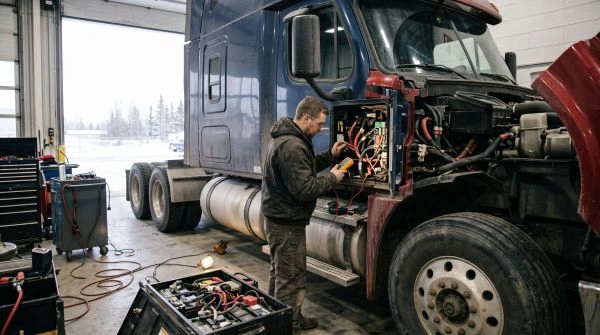
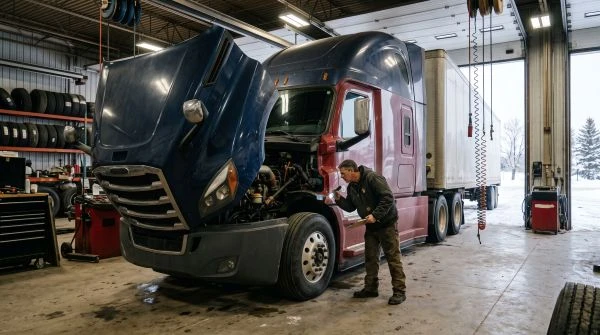
Most drivers initially experience heavy-duty electrical problems as flickering lights, intermittent warning lamps, dead power sockets or a blower fan that functions on some speeds but not others. These symptoms can seem minor, but they are frequently indicative of loose grounds, frayed wiring or defective switches. For instance, a flickering headlamp at night could be more than a burnt-out bulb. It may be a bad connector that supplies other lighting circuits. Faulty switches, worn relays and half-burnt fuses can all cause intermittent power loss, which is difficult to track if you test only when the system happens to be working. When these problems affect starting, charging, lighting, or other critical systems, professional heavy-duty truck repair can help identify the underlying electrical fault before it causes a roadside breakdown.
Overloaded circuits and bad wiring layout are typical in heavy-duty fleets, particularly when numerous add-on devices have been installed over the years. One real-world example demonstrated 27 distinct electrical problems resulting from bad cable routing alone. Cables rubbed on sharp edges, pinched under brackets or tied too tight can wear through insulation in under two years, even on newer trucks. Once copper is exposed, it can short to the frame or other wires, increasing the potential for failures and fires. Corroded connectors and grounds factor in big-time. Moisture, road salt and dirt creep into plugs and junction boxes, creating resistance and heat. These can flicker lights, kill accessories or even melt plastic cases. Alberta’s vehicle standards for commercial vehicles include requirements related to vehicle equipment such as lighting, brakes, and other components, making proper electrical maintenance an important part of keeping commercial vehicles in good working order.
Charging and battery issues lurk behind numerous “electrical” sounding complaints. A worn or loose serpentine belt, for example, can keep the alternator from spinning fast enough to charge even if the alternator itself is fine. Parasitic drains from turned-on interior lights or an add-on device left on can pull a battery down overnight. A good battery will read approximately 12.6 volts with the engine off and something over 13.5 with it running. It’s important to have the batteries tested periodically and replaced as needed to avoid no-start calls and erratic electronic behavior.
A few easy maintenance steps prevent a lot of these problems before they blossom. Good habits such as visual inspections of harness routing, looking for rubbed insulation, cleaning and tightening grounds, sealing connectors against moisture, and repairing minor problems immediately instead of waiting until a breakdown are valuable. Collectively, these measures reduce downtime, repair expenses, and hazards throughout a fleet, especially when incorporated into a consistent fleet service and maintenance program.
These preventive practices can also support an Alberta carrier’s safety and maintenance program which is required for National Safety Code carriers and must be implemented, evaluated, and updated as necessary.
Intermittent Symptoms

Intermittent electrical symptoms in heavy-duty systems tend to indicate loose or corroded connections, aging components or wiring that only breaks when it’s in a bind. Issues tend to come and go and then show back up with a shift in vibration, temperature, humidity or power usage, which is why phantom indicators, blinking bulbs and mysterious battery loss can be so difficult to track down.
Common intermittent problems are slow cranking, occasional charging faults, a blown fuse one time and not since, and sensor readings jumping or resetting for no apparent reason. In a lot of trucks, an alternator, drive belt or regulator will seem fine in the bay but act up only when hot or when the engine vibrates at a certain speed. Damp weather and seasonal swings offer a whole other dimension, as water can sneak into connectors, headlamps and marker circuits or transform a mild resistance to a ground point into a debilitating voltage drop in winter.
Since these faults don’t remain ‘on,’ rapid part swaps tend to fall short. A module can be replaced even though the true culprit is a trailer harness that ohms out fine when straight, but breaks open as soon as it flexes on the highway. Systematic troubleshooting works better: start with visual checks for burnt-out bulbs, heat marks, cracked insulation, and loose or greened terminals. Then measure voltage drops and continuity under load when possible. This slower, incremental approach prevents you from pursuing ‘electrical gremlins’ and helps keep repair bills down.
Flickering Lights
Whether it’s flickering or dimming lights in heavy-duty equipment, the source usually comes back to loose lamp sockets, corroded terminals, bad grounds, or circuits that are just carrying too much load. Voltage dips from a dying alternator, weak battery, stretched drive belt, or chewed wiring harness cause lights to blaze bright with engine speed and then dim to a flicker at idle. This is something many operators first observe at night.
When flicker persists or intensifies, it can indicate hot spots in connectors or cables that increase the danger of meltdown or fire, particularly in closed panels or congested harness bundles. Damp weather can force moisture into headlamp or marker light plugs, and salt or dust will accelerate corrosion around crimp joints and ground lugs.
Basic checklist for lighting checks:
- Look for burnt, loose, or discolored bulbs and sockets
- Inspect all contacts around the lamps for close, clean metal contact.
- Check the harness runs for rub points, pinch spots, and tape repairs.
- Measure voltage at lamp. If the lights are on, identify drops greater than 0.5 V.
Phantom Faults
Phantom faults are warning lights or fault codes that blink on and off, sometimes with no noticeable difference in how the truck drives. They might clear when the main drives or when the weather changes from wet to dry.
Most of which connect back to intermittent ground faults, half-broken wires inside a harness or connectors that lose contact only when they vibrate or heat up. A sensor circuit could appear just fine in a quick test, but it could break on a bumpy road or under a heavy load.
These strange, intermittent failures cause unnecessary swapping of control modules, sensors, or entire harness sections, contributing cost without solving the problem. Instead, it helps to record when and where the fault appears: road type, weather, engine speed, electrical load, and even trailer attached. Intermittent symptoms include pulsing, flashing, or other partial operation. Over time, patterns around vibration, moisture, or temperature change generally indicate the culprit area of the circuit.
Slow Cranking
Slow cranking is frequently linked to feeble or old batteries, corroded terminals, or compromised starter wiring that starves the starter of the current it requires. Parasitic drains pulling power with the truck parked and alternator issues that undercharge the batteries can both show up first as sluggish cranking on cold mornings.
Even when the battery tests “good” with no load, voltage drops across dirty posts, loose clamps, undersized or damaged cables, or poor engine and frame grounds can trim the actual power that reaches the starter. In winter, any little resistance tends to count for more, and a truck that started just fine last month may now crank slow or not at all.
So, before you swap out the starter or alternator, it’s good to at least check battery health with a proper load test, clean and tighten all power/ground connections, and check voltage drop in both positive and negative paths during cranking. This simple exercise frequently cracks the case and helps identify deeper charging-system problems down the line.
Common Root Causes
Heavy-duty electrical issues don’t often arise from a one-time failure. They accumulate from age, wear, and minor routing, sealing, and grounding mishaps.
Main recurring triggers include:
- Harness abrasion and chafed insulation in high-movement zones
- Moisture intrusion into connectors, junction boxes, and harness runs
- Damaged or loose connectors, leading to intermittent faults
- Blown fuses and failing relays result from overloaded or shorted circuits.
- Trailer plug problems arise from corrosion, strain, or inadequate weather sealing.
- Dead batteries (over 3 to 5 years) and parasitic drains from lights or aftermarket add-ons.
- Worn alternators or worn or loose serpentine belts that limit charging capacity.
- Burnt-out bulbs, bad switches, or wiring faults lead to dim or dead lights.
Ground Degradation

Poor or corroded grounds alter voltage flow, so systems sense the incorrect reference level. That manifests as voltage drop, random resets, slow cranking or no-start, even when the battery and alternator test fine.
On heavy-duty trucks, most ‘chronic’ gripes can be traced back to corroded or loose ground studs on the frame, cab, engine block or in the vicinity of lighting brackets. Rust, paint build-up and road salt creep between the lug and metal, increasing resistance. Over time, that causes modules to battle for a clear signal path.
ECUs and sensors need a clean ground to read data. Poor grounding can make sensors “float,” so temperature, pressure or speed readings hop and trip fault codes that resemble failed sensors, when the real culprit is a bad ground or shared return path.
| Ground Point | Typical Location | Suggested Check Interval |
|---|---|---|
| Main battery negative to frame | Near battery box | Every 3 months |
| Engine block ground strap | Engine side to frame or cab | Every 3–6 months |
| Cab/body ground | Under cab or firewall area | Every 6 months |
| Rear lighting / trailer ground | Rear frame crossmember | Every 3 months |
| ECU/module ground clusters | Near fuse/relay or ECU brackets | At each service |
Harness Abrasion
Harness abrasion results from wire rubbing on sharp edges, brackets or moving parts as the truck flexes and vibrates. Over years, the outer loom wears through, then the insulation, until copper presents. This typically occurs where the cab tilts, close to suspension travel, around the engine and anywhere the harness passes through tight bulkhead or frame holes.
Once wires are exposed or chafed, the danger increases for shorts to ground or between circuits, intermittent power loss to lights or sensors, and even localized heating that can ignite a fire. Sudden blown fuses, random module resets, or lights that flicker when the cab moves too frequently indicate this type of damage instead of a bad component.
High-risk spots in frame rails, steering shafts, clutch linkages, fan shrouds, and metal supports for battery boxes or air tanks. Rear harnesses to tail lamps and trailer connectors experience additional strain from load shifts and road spray.
Targeted checks help keep this in check. Check flex locations and tight pass-thrus manually and visually for crushed loom, flat spots or exposed wire. Protect exposed runs with split loom, conduit or abrasion sleeves and attach with appropriate clamps, not sharp metal straps.
Moisture Intrusion
Moisture intrusion is a persistent culprit of corrosion, shorts and difficult to locate intermittent faults on heavy-duty trucks. Water intrudes through cracked connector boots, missing seals, loose grommets, split conduit and pools inside junction boxes or harness low points. Trailer wiring deserves particular attention because moisture and road spray can affect connectors and lighting circuits, making heavy-duty trailer repair necessary when electrical faults originate in the trailer.
When water gets to terminals, it reacts with metal and creates green or white corrosion. This, in turn, raises resistance, heats the joint, and eventually causes voltage drops or open circuits. Trailer sockets and rear lamp connectors are common culprits, particularly in wet or coastal climates.
Condensation inside panels, fuse boxes and harness sections count. Post wash or heavy rain, moisture trapped in the connectors can bridge pins, blow fuses, and cause lights, sensors, or control modules to behave erratically. This is especially true if the alternator output is already anemic from internal faults or a loose serpentine belt, because low system voltage causes marginal connections to manifest more quickly.
Checks should consist of opening suspect connectors and enclosures, then searching for water droplets, green staining, or soft, swollen seals. Be especially vigilant post-storms, pressure washing, river crossings, or any other type of known water exposure when problems trail wet conditions. Moisture is a chief suspect.
Modern Voltage Drop Diagnosis

Voltage drop testing has become the key tool for diagnosing hidden resistance that escapes visual inspection yet still spells slow cranking, dim lamps, mischievous codes and heavy load random shutdowns. Excess drop increases circuit heat, overloads safety systems and destabilizes the entire electrical network. Most codes consider it a major hazard, not a small loss. NEC recommends less than 3% drop on branch circuits and no more than 5% total for feeder and branch. If the combined drop is above 5%, the diagnosis method itself should be audited before anyone decides what to replace because such losses tend to indicate multiple issues at play.
- Attach a digital multimeter with auto-range and a low-voltage scale from 0 to 1 volt across a component or segment of wiring.
- Switch the circuit on so it has its normal load.
- Check voltage on the positive side, then on the ground side at every key point.
- Contrast these readings to manufacturer limits and the NEC three percent/five percent guidance.
- Map out each high-drop point. Then verify by re-testing after cleaning, tightening, or repair.
For Alberta commercial vehicles, the Commercial Vehicle Inspection Manual – Electrical System requirements provide inspection criteria for wiring, harnesses, connections, insulation, circuit loading, grounding, and signs of electrical damage.
Visual inspection by itself overlooks most voltage drop, particularly in heavy-duty harnesses with sneaky splices or crimp sleeves buried in loom. A digital multimeter is the gold standard and thermal imaging is a vigorous sidekick because it identifies hot spots at loose lugs, corroded bus bars, or overloaded connectors that push local drop well past what cable length would predict. On ground circuits, any reading above approximately 0 to 0.1 V under load indicates an impediment. This one truth accelerates fault diagnosis a great deal because elevated ground-side voltage can arise only from added resistance. For repeatable work, most techs begin each diagnostic trail with ground-side voltage drop tests since bad grounds cause inoperative components, slow motors, strange flicker, and even severe radio noise that can hide other defects.
Severe Climate Stress
Severe climate stress takes heavy-duty electrical systems well beyond typical design assumptions. It’s not just impacting power plants and urban grids. It manifests in trucks, mobile equipment, and depot infrastructure that must operate day after day in extreme areas.
Northern Alberta is one clear example of this. Trucks there face extended spells of bitter cold, high moisture and rapid temperature changes as a warm front comes in behind a deep freeze. Steel frames, cable trays and junction boxes go through −30 °C nights to near-thaw days. That swing sucks moist air in and out of buildings. It causes condensation on terminals, breakers and bus bars. Over time, the film of water combines with dust and road grime and becomes a thin, weakly conductive path that increases leakage current and causes protection devices to trip.
Serious climate stress increases the risk of moisture intrusion and corrosion in nearly every component of a heavy‑duty system. Gaskets stiffen and crack in the cold. Plastic conduit and wiring insulation become brittle and more prone to splitting when flexed or struck. After the jacket gives, capillary action pulls water along the conductor into connectors and control modules. This same pattern scales up to the grid level. High temperatures and drought put transformers, breakers, and overhead lines under more stress, and research estimates climate change could reduce transformer life by 20 to 40 percent by century’s end as average temperatures increase 2 to 4 degrees Celsius. Once winding hotspot temperatures top about 98 degrees Celsius, test data indicate ageing rates double with every additional 6 degrees Celsius.
Salt, road chemicals and freeze-thaw cycles accelerate breakdown in connectors and harnesses. Winter service, brine spray coats under-chassis junction blocks, trailer pigtails and frame-mounted fuse panels. When this layer refreezes and thaws numerous times, it gets into crimp joints and seals. Contact resistance increases, heat accumulates under load and the plastic shells can warp or scorch. That same chemistry and mechanics play out on a larger scale on aging grids, where corrosion and mechanical fatigue from ice, heat, and heavy rain leave assets more prone to failure. Severe weather is already associated with over a third of power outages on record between 2012 and 2023, and those same storms carry wildfire, flood and landslide risk that can damage feeders and substations in a single instance. High heat also saps efficiency. Above around 35 °C, solar arrays can lose up to a fifth of rated output, even as summer demand peaks and reveals weak splices, overloaded bus ducts, and under-sized auxiliary transformers that appeared stable during cooler months.
Mitigation in hardscapes begins with improved weatherproofing, not just more frequent part replacement. For trucks and heavy equipment, this translates into sealed connectors of higher IP rating, dielectric grease on pins, heat-shrink and molded junctions on all main harness branches, and routing that avoids direct spray zones. For depots and industrial sites, it translates to enclosures with appropriate breathers, corrosion-resistant alloys, UV-stable cable jackets, and surge protection sized for more frequent storms. Regular inspections should target common climate-related failure points: cracked insulation, green or white corrosion on terminals, swollen or discolored connector shells, loose conduit fittings, and water marks inside panels. On the grid and plant side, asset owners can model higher ambient temperatures, check transformer loading against new limits, and schedule oil tests and thermal scans more frequently during hot seasons. Across mobile and fixed systems, design and maintenance must accept more heat, more moisture, and shorter component lifespans, rather than treat every failure as a discrete defect.
Professional Equipment Needs
A few serious electrical issues are a lot more than a multimeter and a peek behind a panel. With systems that carry high current, run complicated control logic, or connect into data networks, precise troubleshooting requires not only sophisticated test equipment but technicians who know how to use it.
Fundamental checks still have their role. Many issues start with simple checks: blown fuses, loose or corroded battery and busbar terminals, damaged insulation on visible wiring, or tripped breakers in a main board. In a workshop or plant, your in-house people can usually sort this out with hand tools, a digital multimeter, and a simple clamp meter. They serve for well-defined, stable faults like a dead circuit, manifest short, or known overload.
Complex faults look different. Intermittent shutdowns, nuisance trips under random load, power quality problems or failures that manifest only when multiple machines operate simultaneously often require professional equipment. Oscilloscopes help you capture voltage dips, spikes, or waveform distortion that a normal meter would miss. Advanced scanners and protocol analyzers pull data from inverters, drives, PLCs, and networked relays, which is critical when faults are related to control logic or communication errors. Load banks allow a technician to put a fixed, understood load, for example, 50 kW at 400 V, on a generator or distribution line to observe how it performs at actual operating levels.
The specific equipment set varies by industry. A hospital, for example, might require power quality analyzers and UPS testers, whereas a mine site relies on high-current clamp meters, insulation resistance testers and rugged portable scopes. In all instances, professional equipment requires routine calibration, cleaning, and storage. Bad or out-of-tolerance professional equipment needs cut precision, drag down productivity and can mask hazards. Shoddy or frayed tools push up your error rate and slow your production. They make arc faults or shock more likely.
A decision chart like this clarifies. Plan out which symptoms to keep in-house—think fuses and visible wiring—and which warrant a call to someone with pro-level test rigs. Factor in cost, performance, durability, ergonomics, and potential training requirements. Then budget for both the tools and the assistance that allows people to use them safely and well.
Conclusion
Heavy-duty electrical issues can suck time, money, and trust quickly. They almost never start big. A tiny voltage drop, a loose ground, or a worn harness can lurk in there for months. Then, one hot day or one hard freeze, it becomes a breakdown on the road.
Modern trucks operate on slim margins. Smart tech assists, yet it lifts the ceiling for expertise and equipment. Smart diagnostics, methodical repairs, and quality tools beat shot-in-the-dark fixes.
To close, be aware of strange odors, flickering lights, sluggish starters or spontaneous shutdowns. Keep a fault log. Handle tiny things super quick. For the next step, consult a reputable heavy-duty electrician or shop and arrange for a complete voltage drop test.
Frequently Asked Questions
What are common signs of heavy-duty electrical problems?
Watch for dim or flickering lights, slow cranking, weak hydraulics, random fault codes and overheating cables or connectors. Burning smells, melted insulation or repeated fuse failures are cautionary flags. These symptoms are often indicative of voltage drop or high-resistance connections.
Why do heavy-duty electrical issues show intermittent symptoms?
Intermittent problems tend to arise from loose, corroded, or heat-stressed connections. Vibration, moisture, and temperature changes can make the problem come and go. That’s why the fault might only appear under load, in inclement weather, or after extended run time.
How does voltage drop affect heavy-duty equipment performance?
Your heavy-duty electrical issues. Starters crank slow, control modules reset, and sensors read wrong. It can cause false trouble codes and premature part failures. The right voltage and good grounds are necessary for reliable heavy-duty operation.
What tools are needed to diagnose modern heavy-duty electrical systems?
You’re going to need a good digital multimeter, clamp ammeter, test leads, and wiring diagrams. For current fleets, scan tools, data loggers, and OEM diagnostic software come into play. In their shops, they use load testers and thermal cameras to detect hidden resistance and voltage drop.
How does severe climate stress heavy-duty electrical systems?
Extreme heat, cold, moisture and road chemicals deteriorate insulation and seals. They increase corrosion in connectors and grounds. Ice, dust, and mud tear up harnesses. Over time, these conditions cause high resistance, shorts and random electrical failures.
Can I safely troubleshoot heavy-duty electrical problems myself?
Simple things like battery terminals, obvious corrosion and loose connectors are generally safe. Today’s high-current, computer-controlled systems can be tricky. If you’re missing the tools, training or wiring data, it is safer to go with a qualified heavy-duty man.
When should I call a professional for heavy-duty electrical issues?
Call a pro if problems are repeat, intermittent, or involve starting, charging, or safety systems. Reach out if you notice melted wiring, smell burning, or can’t account for a voltage drop. Early pro diagnosis can save you from breakdowns and expensive parts damage.