- Key Takeaways
- Automatic vs. Manual Transmissions
- Automatic Transmission Repair Explained
- Manual Transmission Repair Insights
- The Financial Decision
- The Overlooked Influences
- Extending Transmission Life
- Conclusion
- Frequently Asked Questions
- What are the most common signs my automatic transmission needs repair?
- Is it cheaper to repair or replace an automatic transmission?
- How is automatic transmission repair different from manual transmission repair?
- How much does automatic transmission repair usually cost?
- Can I drive with a slipping or jerking automatic transmission?
- How can I extend the life of my automatic transmission?
- What overlooked factors can affect automatic transmission health?
Key Takeaways
- Automatic transmissions utilize hydraulics, electronics, and computer controls. Manual transmissions employ a clutch and direct gear selection, which influences repair complexity and expense. Knowing which system your car has aids you in selecting the appropriate type of service and specialist.
- Automatic transmission repair usually requires advanced diagnostics, including computer scans and road tests, to locate problems like worn clutches, faulty sensors, or fluid issues. Having your manufacturer’s recommended inspections and fluid checks performed on a schedule can prevent small concerns from becoming costly repairs.
- Typical transmission warning signs to watch for are rough or delayed shifting, slipping gears, warning lights and odd sounds. If you catch shifting changes, symptom logging and an early visit to a trusted shop can stop damage and keep repair costs in check.
- Automatic and Manual Transmission Repair Options: Minor Repair or Full Rebuild or Replacement – Various Price Points and Benefits. Requesting a written quote with a clear explanation of parts, labor, and warranty allows you to make an informed financial decision.
- Driving habits and environment play a decisive role in transmission life, particularly if your vehicle encounters frequent stop-and-go traffic or if you tow or drive in hilly terrain. Smooth acceleration, minimal hard braking, and sticking to the service schedule can help your transmission last.
- Opting for expert, certified technicians, quality parts, state-of-the-art diagnostic tools and reliable warranty support makes any transmission repair or rebuild more reliable. Establishing a long-term relationship with a reputable shop makes maintenance and future repairs easier.
Automatic transmission repair refers to diagnosing and repairing defects in a car’s self-shifting gearbox so it can shift gears seamlessly and securely. Most drivers encounter issues such as rough shifts, gear slip, delayed response, or warning lights, typically due to worn parts, low or dirty fluid, or electronic faults. Prices vary a lot, from a basic fluid service to a complete rebuild or replacement, so specific information assists in advance planning and prevents guessing. Shops utilize scans, road tests, and pressure checks to track the actual cause rather than swapping random parts. You can figure out options like repair versus rebuild, used versus new unit, and when a car is worth fixing. The next couple of sections demystify things in clear layman’s language.
Automatic vs. Manual Transmissions
Automatic vs manual transmissions Both automatic and manual transmissions transfer power from the engine to the wheels in very different ways. Those distinctions affect both how the car drives and how expensive the repairs will be once something breaks.
Core Mechanics
An automatic transmission has a torque converter instead of a clutch. The torque converter connects the engine to the gearbox with fluid, enabling the car to come to a halt without stalling and to pull away gracefully. Within the case, a series of planetary gear sets shifts ratios as both hydraulic pressure and computer signals command various clutches and bands to engage. Modern automatics use sensors, solenoids, valve bodies and a control module that determines when and how hard to shift.
Manual transmissions send power through a clutch that the driver operates with a pedal. When the driver steps on the pedal, the clutch disconnects the engine from the gearbox so a gear can be selected with the shift lever. Power then runs through a straightforward setup of input shaft, output shaft, and meshed gears. In many manuals, there is minimal or no electronic management, so the system remains largely mechanical.
Prime components specific to automatics are the torque converter, valve body, hydraulic pump, pressure circuits and the transmission control unit. Manuals have a clutch disc, pressure plate, release (throw-out) bearing, and linkage or hydraulics for the pedal. Automatic transmission repair frequently involves tracking down faults through electronic sensors, solenoids, and intricate hydraulic pathways. Manual repairs usually concentrate on worn mechanical components such as the clutch kit or bearings.
Driving Experience
Automatic transmissions generally provide a more relaxed, smoother ride. Gear changes can be seamless in city traffic, which reduces driver fatigue, and this is why automatics are common in congested cities. When an automatic begins to break down, drivers might experience harsh shifts, flares where the engine revs but the car doesn’t accelerate immediately, or long delays from “Park” to “Drive.” All of these make for a less comfortable ride and can indicate internal wear or control issues.
Manual transmissions prioritize driver control and engagement. The driver determines precisely when to shift and can maintain a gear for engine braking on long downhill stretches or for rapid passing. Many drivers love this connection to the car, and under normal use, most manuals will outlast the vehicle unless they’re abused with hard launches, clutch-riding, or sloppy shifting. When manuals get into trouble, it tends to manifest with hard or “notchy” shifts, gear selecting grinding, clutch slippage under load, or a heavy or inconsistent pedal.
Some automatic cars have weak gearboxes. For instance, some 6th gen Honda Civic owners have encountered early automatic transmission failures, even with routine maintenance and less than around 180,000 km. That demonstrates that good maintenance reduces risk but doesn’t eliminate it, as engineering and prior use play a role.
Repair Complexity
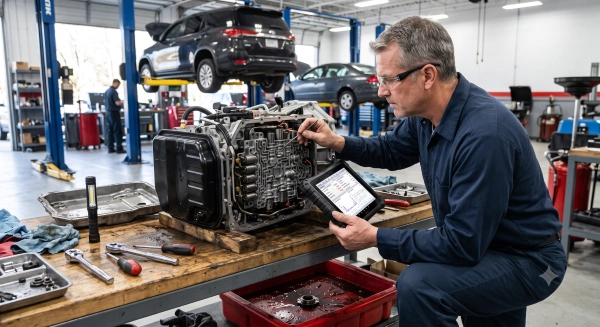
Automatic transmission repair typically requires a specialist and specialized diagnostic equipment. Shops employ scan tools to read fault codes from the transmission control module, watch live data from speed sensors and pressure sensors, and run tests on solenoids and actuators. Interspersed in the unit are numerous clutch packs, seals, and valves, so teardown and rebuild work requires both training and experience. When big components like the torque converter or the complete internal gear set fail, the cost can be enough to total an older car, especially when you include labor hours.
Manual transmission repairs are usually simpler and more affordable. A typical job is a complete clutch overhaul with a new disc, pressure plate and release bearing. One driver cited a repair cost of around $850 for a notorious throw-out bearing failure, which remains well below many complete automatic rebuilds. In most manuals, the gearbox itself lasts if the oil was changed on time and the clutch wasn’t abused. Automatics have two major cost points: the transmission assembly and the torque converter. Failure of either can be very expensive.
Both still need rudimentary maintenance. Manual transmissions might require fluid changes between 60,000 and 100,000 km, whereas automatics often need fluid and filter service every 50,000 to 100,000 km, depending on usage and manufacturer instructions. Even with such care, some owners report failures before 180,000 km, so regular checks and quick attention to new noises, leaks, or shift problems count for both.
Automatic Transmission Repair Explained
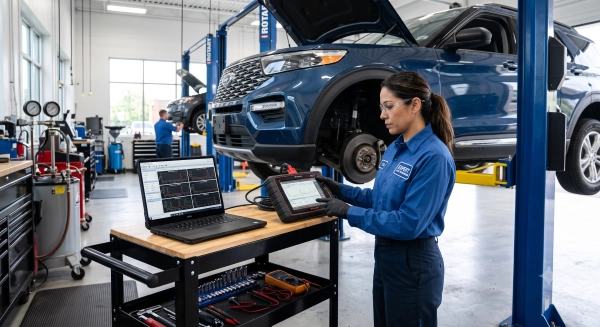
Automatic transmission repair is about diagnosing and correcting problems within a sophisticated piece of machinery that combines hydraulics, electronics, and mechanical components. Our automatic transmission repair services can address issues ranging from minor leaks and electrical faults to major transmission problems. It may be as minor as sealing a leak or as major as a complete rebuild or replacement. Good repair begins with good diagnostics, often with scan tools and a complimentary road test. Regular service remains your best option for preventing big, expensive failures.
1. Common Failure Points
Most automatic transmissions break down in a handful of recurring manners. Worn clutch packs and bands can cause slipping, shuddering or slow shifts, particularly when the car is hot or under load. A faulty torque converter can lead to hesitation when you put it in drive or a persistent shudder at cruising speed. Leaking seals and gaskets drain fluid, causing low pressure and harsh or lazy shifts.
Electronics give out too. Bad sensors and solenoids can send the wrong signals to the control unit, so the gearbox can hold a gear too long, shift at strange times, or drop into “limp” mode. In today’s 8 or 10 speed units, one bad solenoid can impact multiple gears.
Heat and lack of attention advance a lot of these issues. Old, dirty, or low fluid cannot cool or lubricate well, so parts wear faster and seals harden. Easy checks of fluid level and color at regular service appointments frequently detect problems in their infancy.
| Symptom | Likely Cause |
|---|---|
| Slipping or flare between gears | Worn clutches, low fluid |
| Shudder on light acceleration | Torque converter, contaminated fluid |
| Harsh or delayed engagement (D or R) | Pump pressure issues, valve body wear |
| No upshift or stuck in one gear | Failed solenoid, sensor, or wiring fault |
| Red fluid spots under vehicle | Pan gasket, cooler line, or seal leak |
2. Diagnostic Process
Shops employ scan tools, pressure gauges, and a multi-check inspection to identify the specific failure. This usually begins with a free check or simple test so the owner can make an informed decision on how to proceed rather than a guess.
Error codes don’t tell the whole story. Experienced technicians correlate scan data with how the car drives, examining shift timing, slip counts, and fluid condition. A controlled road test evaluates how the transmission shifts under actual speeds and loads, and that response is then matched with computer diagnosis to determine if a minor repair, valve body replacement, or full rebuild is appropriate.
3. Subtle Warning Signs
Early signs are small. A faint warning light, a faint whine at one gear, or a slight hesitation when shifting from park into drive can indicate trouble.
Other symptoms are rough or delayed shifts, a sensation of “slipping” under hard acceleration, or a brief shudder as the car drives through mid-range gears. Other motorists report engine revs rising but road speed not keeping up, frequently linked to frayed clutches. Hesitation in shifting on a hill can be an early warning sign.
Checking fluid on the dipstick, when the car enables it, assists. Dark, burnt-smelly or gritty fluid indicates service is needed, even if the vehicle still runs. It’s useful to jot down when the symptoms appear, such as cold mornings, long climbs, and heavy traffic, and provide that detail to the shop.
4. The Repair Itself
Manual Transmission Repair Insights
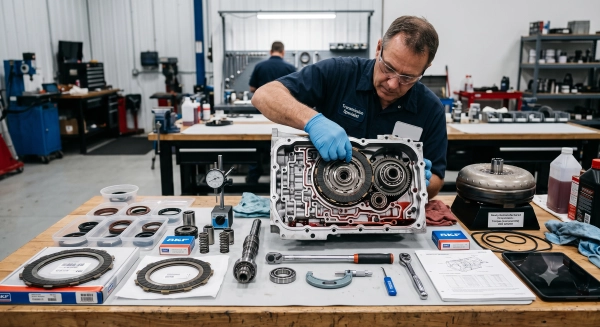
Manual transmission repair revolves around a more limited parts portfolio than automatics repair. Wear continues to be constant among worldwide fleets. Repairs most commonly stem from clutch wear, issues with the gearbox, or chronic stress on bearings. These issues manifest initially as noise, harsh shifts, or slipping under load.
Almost all manual repair jobs begin with the clutch. Clutch plates get worn every time the driver pulls away from a stop or shifts under load, and therefore, they need to be periodically replaced, typically in the 65,000–160,000 km range (roughly 40,000–100,000 miles). In cities with stop-and-go traffic or steep hills, that period can be significantly briefer. This is why workshops in India, Brazil, and much of Southeast Asia do a tremendous amount of clutch work, as manuals still rule small cars and light trucks. A clutch replacement could consist of the friction disc, pressure plate, release bearing, and occasionally the flywheel, in addition to a check of hydraulic components. If a driver disregards initial symptoms – slip, burning smell, high bite point – heat can scar the flywheel and increase expenses.
Outside of the clutch, gear synchronizers and bearings are the typical failure points. Worn synchronizers manifest themselves as grinding when shifting, typically initially in the lower gears, or as a shift lever that resists your efforts. Differential bearings might generate a steady humming sound that varies with speed or a rumble in select gears exclusively. Manual gearboxes are less complex than automatics, but proper repair still requires a seasoned mechanic who can correlate noise, vibration, and road speed with probable internal components. This is especially the case with dual-clutch transmissions that employ manual-type gearsets but layer on complicated controls and are commonly seen in performance models.
Manual work is typically more affordable than automatic repair as there are fewer electronic components, fewer sensors, and generally no complex valve body. Basic gearbox oil swaps at 50,000 to 95,000 kilometers (30,000 to 60,000 miles) and early leak, noise, and shift feel inspections prevent full rebuilds. This is most important in markets with older fleets such as Germany, France, and the U.K. Where many cars from the previous decade run beyond 200,000 kilometers and hard usage and age increase repair rates. With global fleets continuing to increase and Asia Pacific leading transmission work overall, basic manual service will remain in demand among both passenger and commercial sectors.
The Financial Decision
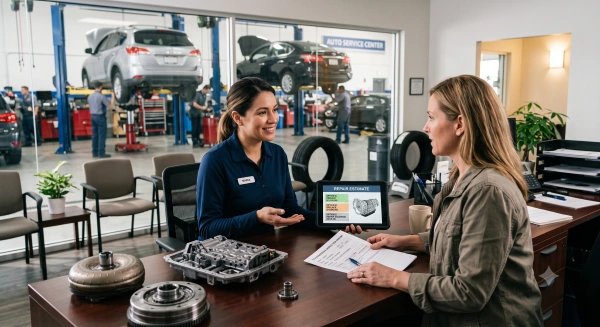
The money side of automatic transmission repair boils down to transmission type, severity of damage, and source parts availability. They can cost anywhere from a few hundred to several thousand US dollars, so a clean view of what your options are is more important than any specific price quote. Making the wrong choice can set you back thousands, particularly if your car is older or near the end of its transmission life.
Repair Costs
Auto transmissions are generally more expensive to repair than manuals because they have more parts, tighter tolerances, and often require more time to diagnose. Even a trivial problem like a fluid leak or sensor malfunction can require extended time to locate because many automatics are sealed units that necessitate specialized tools and scanning apparatus. Manuals are more mechanical and easier to open, so labor time and parts costs are usually reduced.
For major issues, transmission repair and rebuilds can provide an alternative to complete replacement.
For big work, the gap expands. Rebuilding an automatic usually means complete disassembly, cleaning, measuring, and replacing a lot of wear items. That labor stacks up fast and is one of the reasons a total rebuild or replacement can hit the upper end of the “several thousand dollars” range, while an equivalent manual repair may linger lower, even on the same vehicle type.
Typical Transmission Repair Cost Ranges in Canada
| Service type | Manual transmission | Automatic transmission |
|---|---|---|
| Minor repair / service | CAD $280 – $840 | CAD $350 – $1,260 |
| Partial / full rebuild | CAD $1,120 – $2,800 | CAD $2,100 – $4,900 |
| Complete replacement | CAD $1,680 – $4,200 | CAD $2,800 – $7,000+ |
Always request a written, specific quote. It needs to have parts, labor hours, fluid, taxes, and any additional fees in addition to what warranty comes with it and what doesn’t.
Rebuild Viability
A rebuild can be a frugal compromise when the case is still intact, the damage is internal to the unit, and the vehicle itself is worth saving. This is usual for an automatic with worn clutches, burned fluid or harsh shifts but no cracked housing or severe physical break. If the vehicle isn’t too high in mileage and the body, engine, and electronics are in good condition, rebuilding can be more cost-effective than paying for a new or fully remanufactured unit.
Rebuilds typically cost less than a new replacement and maintain your original transmission housing and many hard parts, which assists with fit and compatibility. Worn clutches, seals, and bushings get replaced, so you renew function without buying parts that don’t often fail. This can be appealing if you intend to hold onto the car for a few more years and desire steady use without overspending.
Quality rules. A good rebuild requires a master mechanic, good brand parts and a clean garage mentality. Bad work can go under fast, eliminating all margins. Therefore, it’s wise to consider the length of the warranty, what it covers, and the shop’s reputation. With automatics, which can make it 240,000 to 320,000 kilometers (150,000 to 200,000 miles) before trouble, if your unit is in that neighborhood and the rebuild quote is approaching a replacement price, replacement may be the more logical long-term decision.
Replacement Options
Full replacement is typically the wiser course when the damage is extensive, the unit has already failed more than once, or the design is antiquated and infamous for its chronic shortcomings. It becomes more appealing when the car is close to the median transmission lifespan and you’re looking for many more years of use with less concern about recurring failures.
There are three main replacement paths, each with trade-offs in cost, risk, and life span:
- New (factory or OEM‑equivalent) . . Most expensive, but typically longest life, robust warranty and best fit to original factory specs. More reasonable on newer vehicles with higher sticker prices or if you depend on the car for daily commuting.
- Remanufactured. A reman unit is torn down and rebuilt by a specialist using standardized procedures and is often bench tested. Price is between new and used, with a structured warranty and solid reliability. This is typically the “value” option for mid-age vehicles you intend to keep, but don’t want to blow your budget on.
- Used (salvage or low‑mileage take‑out). Lowest initial cost but greatest risk. Condition is contingent on the donor vehicle’s history, which isn’t always transparent. Warranty, if any, is typically brief. This option works better if your car is older, you’re on a tight budget, or the vehicle itself isn’t going to remain in service much longer.
For any of these, the transmission must match the vehicle manufacturer’s exact specifications: same gear ratios, electronics, and software compatibility. A bad match can cause shifting problems, warning lights, and even fry other systems. Before you buy, match warranty length, coverage (parts versus parts and labor), and expected life span of each to your vehicle plans. If the car is old, high mileage, and you’re not planning on keeping it long, a cheaper solution or even selling the car as is may make more sense than a top-tier replacement.
The Overlooked Influences
Automatic transmission repair isn’t just about worn parts or a leaking seal. There are numerous subtle, easily overlooked forces at play that determine how long a gearbox survives, the frequency of service it requires, and the cost of that service throughout the life of the vehicle. These hidden influences linger in your daily driving habits, in the software that controls every gear change, and in how each manufacturer designs and supports its systems.
Driving Habits
Driving habits can really make a difference in transmission maintenance. Hard launches from every light, late braking, and quick shifts to reverse all contribute to heat and stress. In heavy stop-and-go traffic, typical in congested cities, the transmission continues cycling through low gears as fluid temperatures increase, which accelerates wear on clutches and seals. When you tow heavy loads or drive through hills or mountains, the unit tends to remain in lower gears, which increases internal pressure and heat, yet again.
Transmission fluid is the lifeblood. It cools, cleans and cushions bits that’d otherwise grind and burn. When the fluid is old, low or the wrong type, that safety margin shrinks quickly and small stuff can become expensive fixes. Regular fluid inspections, even in between service visits, frequently identify leaks or premature staining before you’re dealing with sliding gears.
Good habits eliminate all of this anxiety for stick and automatic transmissions. Easy, consistent accelerations, early but soft braking, and providing extra room in traffic all contribute. Being in the right gear when towing or climbing is important, rather than making the transmission scramble for gears. Local driving conditions count. Long highway stretches at constant speed tend to be easier than short city stretches during a heat wave, where both traffic and temperature stress the system more.
A simple checklist can help. Avoid hard launches, keep towing within rated limits, use manual or “low” modes when descending long hills, warm the car briefly in very cold weather, and follow fluid and filter intervals that match your mix of city, highway, and load.
Vehicle Software
These days, automatic transmissions use control modules and software that determine when and how every shift occurs. These systems monitor data from multiple sensors and then select line pressure, shift timing, or even torque converter lock-up. When updated and customized for your vehicle and conditions, software can soften shifts, reduce heat, and extend component life.
Old or broken software can have the opposite effect. Drivers might experience rough or late shifts, a check engine light, or a transmission warning icon. In others, bad logic keeps the unit in the wrong gear for too long or lets it slip between ratios, which causes wear and can lead to early failure. Other transmission types, such as CVTs, rely even more heavily on precision control and typically require dedicated fluid and software approaches.
As a consequence, software checks ought to nestle beside fluid and filter service on your regular regimen. When you schedule automatic transmission service, request that the shop scan for fault codes, check shift data, and verify that the newest calibration is installed. A trusted transmission expert or dealer service department can inform you if there is an update that enhances shift quality, fuel efficiency, or longevity.
Retaining a copy of every software update and diagnostic report alongside your service records allows you and any future shop to quickly know what has been done and when.
Manufacturer Quirks
Certain brands and models have famous transmission curves, both positive and negative. A handful employ units that are susceptible to missed fluid exchanges. Others depend on particular fluids that aren’t interchangeable. Some have first-generation CVTs or dual-clutch systems requiring meticulous maintenance. Even car type is significant. A compact car with a light-duty automatic typically experiences different wear than a hulking SUV packed with kids and making regular trips to towing yards.
Before scheduling repair or service, it’s useful to see if there are manufacturer recalls and technical service bulletins (TSBs) associated with your transmission code. These typically list shared faults, updated components or revised service intervals and occasionally software tweaks that ease shifts or minimize internal stress.
Common manufacturer‑linked quirks include:
- Shortened fluid change intervals for certain high‑heat designs
- Special fluid formulas for CVTs, dual-clutch units, or specific gearboxes.
- Known failure points include valve bodies, solenoids, and torque converters.
- Suggested software upgrades to address shudder, flare, or harsh shifts.
- Additional cooling or updated driving guidance for heavy-duty or towing packages.
Servicing history is key. A comprehensive, transparent history of fluid changes, filter replacements, repairs, and software updates bolsters warranty claims, aids in diagnosing repeat faults, and brings confidence to the next owner at resale.
Extending Transmission Life
Automatic transmissions last longer when they run cool, clean, and aren’t pushed beyond their design limits. Small, habitual repairs outpace one mega fix later.
Periodic service is the foundation. Transmission fluid and the filter transport heat and micro metal shavings away from moving components. When the fluid breaks down, those parts run hot and grind more. While most cars cope fine with a fluid and filter change every 60,000 to 100,000 kilometers, checking the level and color more frequently catches trouble early. Fluid that smells burnt or looks dark or has grit in it needs attention. Using the precise type of fluid the manufacturer specifies is not a point to gloss over. Newer units are tuned for a particular blend. The wrong fluid can make shifts harsh, cause slipping, or lead to premature wear. A quick peek at your cooling system returns dividends because the transmission cooler can often run through that very same radiator. If your engine’s hot, so is your transmission, so is its lifespan.
Driving habits matter as much as service. Walking the car for a few minutes before driving it, particularly on colder days, allows the fluid to circulate. A few minutes of idle, then easy driving for a few kilometers usually does the trick. Avoid full-throttle starts or heavy towing until the drivetrain is up to temperature. Avoid switching from drive to reverse or between gear ranges while the car is still in motion. That shocks the internal clutches and bands. Listen for warning signs such as delayed engagement when you step on the drive, new noises, or little leaks on the pavement. An annual transmission inspection can catch these while the fix is still small.
For Alberta drivers, a shop like Hart Transmission & Mechanical provides value in the form of routine care paired with repair expertise. Its light and heavy-duty repair services can help address drivetrain, mechanical, and maintenance needs alongside transmission concerns. A team armed with advanced scan tools, pressure tests and road tests is able to distinguish a simple sensor fault from an actual internal failure. A full-service shop that does cooling system, drivetrain checks and scheduled fluid service all in one place makes it easier to stay on track. When a shop is transparent about results, timeliness and price, it builds ongoing trust and helps the transmission endure, not just limp along until it fails again.
Conclusion
An automatic or stick shift both require love, just in different forms. Having a definite plan is an immense help. Recognize the symptoms, stay on top of fluid checks, and repair minor problems early. That habit saves money and stress.
Fix it, rebuild it or replace it. Each option has its advantages and disadvantages. You weigh price, the age of your car and how long you intend to keep it. A good shop provides direct results, clear pricing and actual testing, not guesswork.
Bonus: Driven right and maintained with ease, a transmission can hold strong for decades. Imagine silky shifts, fresh fluid, and less danger on the highway.
Got a noise, slip, or strange shift sensation at this moment? Take note, bring your final service invoice and consult with a reliable repair shop today.
Frequently Asked Questions
What are the most common signs my automatic transmission needs repair?
Keep an eye out for delayed shifting, hard or jerky shifts, slipping gears, burning smell, grinding noises and transmission warning lights. If you see red or brown fluid under your car, have it inspected by a professional as soon as possible to prevent more serious and expensive damage.
Is it cheaper to repair or replace an automatic transmission?
Small problems such as leaks or sensor faults tend to be less expensive to fix. Severe internal damage usually results in replacement or a complete rebuild being more economical. A certified transmission specialist can weigh that against the cost of repair given your vehicle’s age, value and long-term plans.
How is automatic transmission repair different from manual transmission repair?
Automatic repair usually means a hydraulic puzzle, electronics, and torque converters. Manual repairs tend to concentrate on clutches, synchronizers, and gears. Automatic work is generally more specialized and can be more costly because of parts complexity and diagnostic time.
How much does automatic transmission repair usually cost?
Prices range significantly depending on the car, issue, and location. Basic repairs such as fluid or seal replacement may be reasonable. Full rebuilds or replacements can be much higher. Always get an estimate, parts list, and warranty in writing before you approve work.
Can I drive with a slipping or jerking automatic transmission?
Driving with slipping, jerking, or delayed shifting is dangerous. It can lead to additional internal damage and unexpected power loss. If you can, don’t drive and have it towed to a good transmission shop for diagnosis and repair.
How can I extend the life of my automatic transmission?
Change transmission fluid and filter at the intervals in your owner’s manual. Steer clear of hard acceleration, towing loads beyond your limits, and relentless stop-and-go traffic as much as you can. Keep your transmission cool, repair leaks early, and have it inspected by a trusted technician regularly.
What overlooked factors can affect automatic transmission health?
Heat, towing heavy loads, frequent short trips, wrong or low-quality fluid, and overdue software updates can all shorten transmission life. Even bad engine maintenance can put stress on the transmission. Controlling these issues serves to minimize repair expenses and maximize service life.