- Key Takeaways
- The Hydrovac Truck Anatomy
- Why Specialized Hydrovac Servicing Matters
- The Non-Negotiable Facility
- Beyond Standard Mechanical Skills
- A Proactive Servicing Approach
- The True Cost of Downtime
- Conclusion
- Frequently Asked Questions
- What is included in a typical hydrovac truck servicing?
- How often should a hydrovac truck be serviced?
- Why do I need a specialized hydrovac service facility?
- How does proactive servicing reduce hydrovac downtime?
- What skills should hydrovac technicians have beyond basic mechanics?
- What are the main costs of hydrovac truck downtime?
- How do I choose the right shop for hydrovac truck servicing?
Key Takeaways
- Hydrovac trucks leverage multiple integrated systems comprising high-pressure water, industrial vacuum, debris containment, and advanced controls, so servicing needs to think about how all these components interact. Frequent checks on every system stop minor problems from becoming catastrophic breakdowns.
- Specialized hydrovac servicing maintains system integrity by targeting hydraulics, electrical systems, and high-pressure components that typical truck shops may not know the full extent of. Selecting trained technicians diminishes the possibility of substandard fixes and recurrent failures.
- Hydrovac trucks require proper servicing for operator safety as it keeps high-pressure water lines, vacuum systems, and control panels functioning within safe limits. Regular safety inspections and system diagnostics assist in minimizing accidents and unexpected downtime.
- Excellent servicing extends uptime and safeguards your hydrovac investment by identifying wear and damage when it is relatively small. Maintaining a defined service schedule can increase equipment life and reduce overall operating costs.
- A proper service facility includes oversized bays, heavy-duty lifts, specialized tools, and a robust parts inventory, all required to service hydrovac trucks. Confirming a shop has these capabilities prior to scheduling service can result in speedier, more precise repairs.
- Informative servicing that includes predictive maintenance, seasonal preparation, performance tests, and rust control and prevention reduces downtime and financial impact. Scheduling service to operating needs facilitates smoother project scheduling and more consistent service.
Hydrovac truck servicing is the maintenance, inspection, and repairs of hydrovac units used for non-destructive digging and debris removal. In many cities, these trucks assist with utility work, daylighting, slot trenching, and pipeline maintenance where soil needs to be shifted without damaging buried lines. Robust servicing plans usually include vacuum systems, water pumps, boiler units, debris tanks, and safety controls. Many operators monitor service hours, key wear components, and fluid changes in order to minimize breakdowns and job delays. Some fleets adhere to factory plans, while others construct custom schedules around climate, soil composition, and workload. The following sections deconstruct fundamental service activities, price determinants, and how to schedule a feasible timeline.
The Hydrovac Truck Anatomy
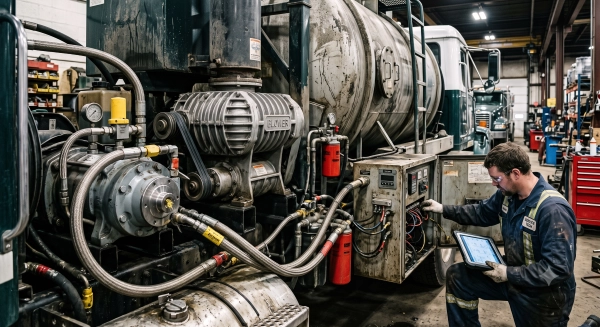
A hydrovac truck fuses water and vacuum power in a single mobile unit to excavate with surgical precision around buried utilities, structures, and confined job sites. It seems simple from the outside, yet the truck is a series of interconnected systems that have to operate in unison to remain safe, efficient, and easy to maintain.
Integrated Systems
The truck is built around two major components: a high-pressure water hose and a suction hose. They function as one system, so any maintenance schedule needs to consider them as connected, not individual devices. The water slices and loosens soil, and the vacuum sucks the slurry into the debris tank. Any mismatch between them appears quickly as slow digging or blockages.
Most modern hydrovacs can dig as deep as 18 m and as far as 180 m from where the truck is parked by deploying remote hoses across the excavation site. This reach reduces traffic risk and surface damage. It introduces wear points at every hose joint and reel. Regular inspection of fittings, seals, swivel joints, and hose reels minimizes unexpected downtime, particularly when the crew frequently positions itself some distance from access roads or service bays.
High-Pressure Water
The high-pressure water utilizes a pump, boiler, filters and hoses to cut soil while maintaining utilities intact. Some units hold up to 5,870 liters of water, so leaks, weak clamps or poor pump seals can waste an entire shift’s supply.
Truck-mounted water heaters keep water workably warm in cold weather, so the very same truck can operate year-round in freezing climates. In service, that translates to added attention to burner nozzles, fuel lines, thermostats and scale build-up in coils because any dip in heat manifests as sluggish suction in frost or frozen clay.
Industrial Vacuum
The industrial vacuum system hoists wet, heavy spoil through the suction hose into the debris tank. For deeper work, like 6 meters piling holes, the blower has to keep pace with lift height and hose length or production plummets. Routine blower service, including oil changes, filter cleaning, and belt and coupling checks, maintains vacuum levels and prevents overheating.
Crew habits are important, too. Gentle hose routing, short bends and constant feed of material assist in keeping the load on the blower even. On sites where the truck frequently excavates 60 feet depths or greater, operators will often record vacuum readings and blower hours so that maintenance crews can modify service intervals based on actual use rather than time alone.
Debris Containment
The debris body holds slurry and spoil, typically up to approximately 9.2 m³, so tank integrity is core for both safety and road regulations. Internal wash-down nozzles, tank liners and baffles all require regular inspections, as dried clay, sand or aggregate buildup can reduce capacity and shift the center of gravity while driving.
Dump doors, hinges and locking systems take a beating as well. Maintaining the hoist, door seals, level sensors and sight gauges helps keep off‑loading fast and minimizes spill danger. In fast-paced city work, where dump runs are a dime a dozen, basic things like greased pivots and clean hinge pins are often the difference between a truck completing multiple jobs in a shift and one waiting at the yard for repairs.
Complex Controls
Controls pull the entire system together so a standard two-person crew can operate the truck safely. One operator can remain stationed near the control panel, controlling pump output, blower speed, and heater settings, while the other operator works at the excavation end with the water and suction hoses. Both have to respond to straightforward feedback from gauges and warning lights and sometimes remote control pendants.
Remote hoses that stretch up to about 90 m from the truck add more control points: wireless remotes, emergency stop buttons, and communication routines between crew members. Servicing here is more than software check ups; it includes cable strain relief, remote batteries, labeling, and protecting panels from mud and water. On day-in and day-out trucks, little things like making controls clean and readable have an immediate impact on near-miss reports and fatigue for the crew after long weeks on site.
Why Specialized Hydrovac Servicing Matters
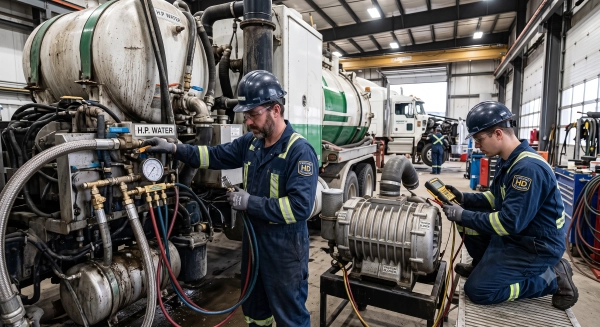
Specialized hydrovac servicing keeps these units safe, efficient, and predictable on real jobs, from tight city streets with dense utilities to remote sites with harsh weather and mixed soil.
1. Preserving System Integrity
A hydrovac truck runs on three core systems working in sync: the blower and suction line, the high-pressure water circuit, and the debris tank. Each one endures wear specialized to hydro excavation, not trucking in general.
Sand, clay, and silty loam all flow through the system differently. Sand is sandpaper on the boom, elbows, and hose. Clay can cake inside the tank and lines. Silty material likes to lodge in low points and clog filters. Specialized servicing measures wall thickness on critical bends, liner wear, and filter cleaning or replacement before suction loss manifests onsite.
Deep work, like piling holes around 6 m or 20 ft, really pushes blowers hard. When blower size, seals, and relief settings don’t match lift and hose length, operators experience slow production, overheated components, and premature failure. A specialized technician observes how the truck is really used, then calibrates blower clearances, vacuum relief, and hose layout to that profile, not a generic spec.
2. Ensuring Operator Safety
Operator safety begins with predictable pressure and vacuum. High-pressure water systems operate at pressures that are capable of skin lacerations and asset strikes underground. Servicing means checking pressure relief valves, trigger guns, hoses, and fittings for wear or tiny leaks that might not be apparent on a quick walk-around.
For example, in cold regions such as much of Canada where hydro excavation is used frequently in frozen ground, the water circuit can freeze if the heaters, insulation, and recirculation lines aren’t performing as engineered. Specialized service teams pressure test coils, verify thermostat function, and ensure that winterization routines truly shield both people and equipment during sub zero work.
3. Maximizing Uptime
Hydrovac projects frequently operate on narrow windows, particularly in urban environments where traffic management, utility shutdowns, and permits for access are prearranged.
Unscheduled downtime from a clogged debris tank, failed blower, or frozen water pump can put a whole crew out of commission and affect other trades as well. Specialized servicing spots early signs of trouble: falling suction, slower tank off-loading, rising blower temperatures, or unusual vibration. Regular filter changes, hose rotation, nozzle replacement, and tank cleaning keep the production rates steady.
Over time, this reduces call-outs, reschedules, and overtime hours that result from mid-dig breakdowns.
4. Protecting Your Investment
Hydrovac trucks are worth as much as a mini fleet of light vehicles, so how they’re serviced is directly related to resale value and lifecycle cost. A unit with documented routine blower inspections, tank checks, water pump servicing, and heater system maintenance will typically retain value better than one that was only given oil changes.
Specialized servicing prolongs component life. Easy things, such as pairing nozzles to the local soil type, washing abrasive debris off the tank floor, inspecting boom seals, and scheduling regular commercial vehicle inspections delay wear that would otherwise quickly result in major rebuilds.
5. Maintaining Compliance
There are a lot of rules out there around spoil handling, noise, emissions, and working around critical utilities. A well-maintained hydrovac supports these needs in a tangible manner.
Good, clean tight systems minimize leaks and spills while loading and off-loading, supporting your environmental objectives and cutting clean-up costs. Efficient pumps and blowers can help reduce fuel consumption and water waste, key for companies that monitor sustainability metrics.
The Non-Negotiable Facility
When it comes to hydrovac truck servicing, the “non-negotiable facility” is the workshop. The area, equipment and processes either facilitate secure operation near essential buried lines or they impede teams in the area.
Oversized Bays
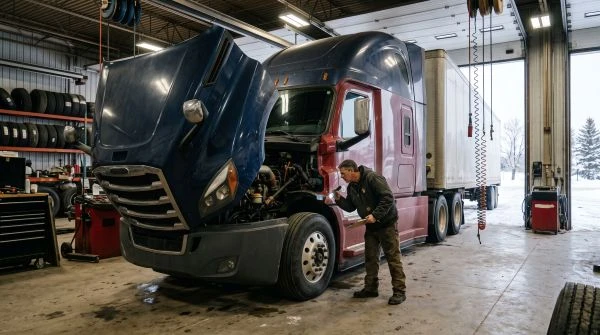
Hydrovac trucks are tall, long, and heavy with tanks and debris bodies in place. Oversized bays provide ample space to park, open full height dump bodies, swing booms, and still safely navigate around the unit. A hard bay induces shortcuts such as partial inspections or bypassed leak checks on vacuum and water lines.
All that extra length and height counts most when your work connects directly to non-negotiable facilities in the ground. When a truck daylights electricity, gas, or water lines, a missed problem in the bay can become a problem on site. For instance, a feeble water hose or valve may pop while exposing a fiber line, converting a targeted hydro excavation into a wild washout. Bay space provides safe work during severe weather preparation by installing insulation kits or inspecting heaters prior to winter, where frozen soil makes excavation more dangerous near live utilities.
Heavy-Duty Lifts
Heavy‑duty lifts must support the weight of an entire loaded hydrovac chassis and frame, not just a lightweight service truck. These lifts allow comprehensive undercarriage inspections of suspension, brake systems, and frame rails that shoulder the burden of vacuum tanks and water loads.
Safe lifting depends on how safely crews operate around non-negotiable facilities. A broken brake or steering component on the road can become an incident at a location with congested underground infrastructure. With the right lifting, technicians can detect frame cracks, loose U-bolts, and leaking hydraulic lines before a truck goes to a job where a little failure could take out a gas line or shut down a power feed.
Specialized Tooling
Hydrovac servicing requires more than common wrenches and jacks. Shops require high-pressure pump test stands, vacuum blower service tools, calibrated pressure gauges, and cleaning rigs for debris tanks. Without them, fine problems in the dig system go unseen, even if the truck appears to function.
This tooling facilitates secure work surrounding non-negotiable facilities like live power ducts or district heating lines. For instance, precise pressure checks maintain water jets in safe boundaries so they cut dirt, not cable jackets. For those in cold weather areas, equipment for testing boiler systems, tank heaters and insulation maintain water temperature for frozen ground, where inadequate control can rupture older pipes or compromise protective coatings.
Vacuum adjuncts count. It needs to be properly tested blowers, filtration and relief valves so that there is less chance of debris carry-over or clogs when pulling spoil away from fragile utilities. The same vacuum excavation techniques that safeguard underground systems in the field need to be backed by properly maintained equipment in the shop.
Parts Inventory
A hydrovac-ready parts inventory keeps key items on the shelf: high-pressure hoses, nozzles, vacuum filters, wear plates, valves, electrical sensors, and heater components. If these pieces are not in place, a truck can idle for days and project teams will revert to mechanical excavation around vital lines to meet deadlines.
Stock picks must fit the work done on non-negotiable facilities. When working close to gas or high-voltage power, shops find it useful to stock spare safety-rated hoses, emergency shut-off valves, and control switches. This assists in getting units back in service promptly post-failure, so teams stick with vacuum excavation rather than tread on dangerous territory.
Good inventory control supports careful planning and coordination with utility owners and project managers. When everyone knows parts are available, they can plan work windows around hospitals, data centers, or water plants with greater assurance. Non-negotiable facilities then have less risk of disruption since hydrovac trucks remain accessible, dependable, and configured for non-destructive excavation.
Beyond Standard Mechanical Skills
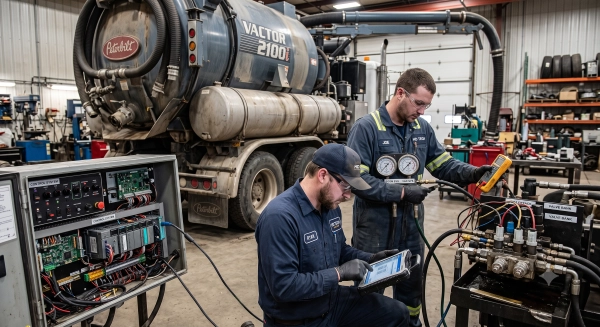
Hydrovac truck servicing pulls from standard mechanical work. It leans heavily on hydraulic, electrical, water, and vacuum systems. Operators and technicians deal with sophisticated gear, shifting dirt and narrow safety margins, so education and approach are as important as wrenches and components.
Hydraulic Expertise
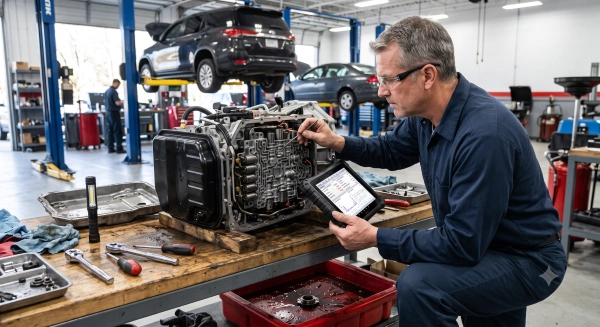
Hydraulics power the boom, hose reel, and sometimes stabilizers, so understanding pressures, flow, and valve behavior is not optional. A tech must be able to read hydraulic schematics, test pump output, set relief valves to the correct bar, and identify telltale signs like slow boom motion, heat in the oil, or noisy pumps under load. A leak at 200 bar is beyond a housekeeping issue; it is a safety and fire risk.
Hydrovac work varies with excavation type. Deep holes, long reach above obstacles or tight urban spaces all strain cylinders, swing motors and hoses in different manners. With service plans including hose route checks, regular filter changes and oil sampling, trucks are supported to handle frozen ground jobs, extended duty cycles and constant boom repositioning.
Electrical Diagnostics
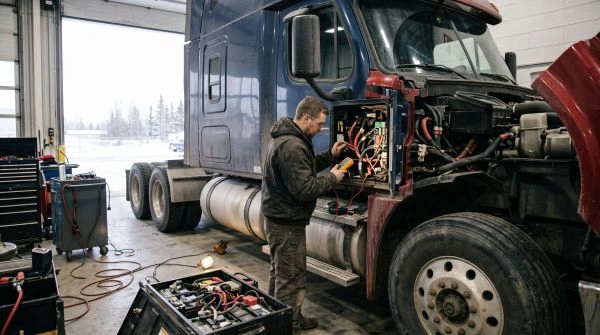
New hydrovac trucks are operated by control modules, sensors and safety interlocks. Servicing is more than replacing fuses. It involves following signal paths, inspecting ground points, and employing a multimeter or scan tool to confirm sensor readings for tank level, water temperature, and vacuum.
When troubleshooting, techs frequently must distinguish a wiring fault from an actual system fault. For instance, a “low water” alarm might be triggered by a faulty float, worn harness, or a legitimately empty tank. Precise diagnosis minimizes downtime and lessens the danger that an unsafe condition goes unnoticed on the worksite.
Water System Knowledge
At the core of hydro excavation is the water system: pumps, tanks, heaters, and nozzles. To work well, you need to compensate for water volume, pump pressure, and flow so the jet slices through dirt but doesn’t damage underground pipes. For frozen ground, burner performance is imperative. A poorly serviced burner can reduce working speeds or leave ice in hoses. In cold-winter areas, proper winterization, line draining, safe antifreeze methods, and insulation checks prevent cracked coils and fittings that would break on the first freeze.
Different sites layer more on. Sandy soil, dense clay or mixed backfill all react differently to pressure and flow. Crews performing deep excavations or operating in tight spaces might opt for higher-pressure, low-flow tips to manage spoil volume while still breaking up the earth. This links directly to debris capacity. If the debris tank is small, operators need tighter control of how much slurry they make to avoid frequent trips for dumping.
Hydro excavation as a technique has expanded rapidly in places where frozen ground or congested urban utilities make open trenching hazardous. In 2017, there were over 400,000 reported excavation accidents in North America alone, causing many project owners to prefer non-destructive digging. Service teams who understand the connection between water system health and cut quality and control can facilitate that move to safer, more minimal work.
Vacuum Pump Repair
The vacuum system, blower, filters, and air lines determine how quickly a crew can vacuum spoil out of the hole and into the tank. Tending this system requires more than standard mechanical aptitude. It means monitoring suction efficiency, scanning for leaks around air seals, examining filter media, and adhering to narrow clearance tolerances inside the blower or fan. A loss in suction could arise from damaged seals, loaded filters, or even minor air leaks at door seals or hose connections.
Proper vacuum upkeep enhances general site safety and productivity. When suction is powerful and consistent, the operator can better manage debris around exposed wires or pipes, which is a lifesaver when working adjacent to live utilities in congested rights-of-way. Hands-on training with actual fault-finding on vacuum pumps, along with safe lockout procedures, equips technicians and operators to keep these systems reliable during heavy use and severe weather.
A Proactive Servicing Approach
For hydrovac trucks, it means scheduling work before issues appear. To stop things from failing, reduce downtime, and keep crews and sites safe, instead of scrambling to repair things after they break.
Predictive Maintenance
Predictive maintenance begins with understanding how the truck and its critical systems perform during standard operation. This covers the blower, water pump, debris tank, vacuum hoses, boom, hydraulic circuits, and control electronics. When operators and service teams know what normal pressures, flows, temperatures, and noise sound like, they can detect the early onset of wear or partial blockages before they develop into a full failure.
These days, most fleets already employ telematics and rudimentary IoT tools to monitor operating hours, engine load, fuel consumption and fault codes as they occur. Data from these systems can feed into maintenance software that alerts when equipment is approaching a danger threshold, such as a pump rising in temperature or many small vacuum drops. With this, service intervals transition from static estimates to dynamic determinations that align with each truck’s actual workload instead of an arbitrary schedule.
Routine service every 250 operating hours still lies at its heart. At that time, they typically change filters, check oil and hydraulic lubricant, examine valves and seals, and flush tanks and lines. A predictive program takes this visit information — what was worn, what was still good — to update the next plans. Working with specialized technicians who understand your particular hydrovac model, its configuration, and likely failure points, as part of a comprehensive fleet service maintenance program, makes this process much more precise and maintains reliability in the long run.
Seasonal Preparation
Seasonal preparation refers to accommodating your service plan to the changing climate and the changing nature of the job throughout the year, rather than servicing every month the same.
In colder climates, this typically entails inspecting insulation, confirming all water lines are serviced by a heater, and transitioning to low temperature rated fluids. In warmer regions, it might be more about cooling, hose integrity in high heat, and dust control in vacuum parts. This focused effort minimizes the likelihood of weather-related emergency breakdowns and diminishes safety hazards like frozen lines or overheated hydraulics.
Performance Testing
Performance testing tests whether the truck still performs the output it was designed to deliver, not just whether it starts and drives. This typically includes vacuum power, nozzle water pressure, boom and hose movement, and control system reactivity. Others conduct basic benchmark tests, like a standard lift test or timed tank fill, and then compare results over time to identify slow loss of performance.
Adding data-driven insights and real-time monitoring to these tests provides more richness. For instance, monitoring vacuum levels, pump amperage, or hydraulic pressures under simulated heavy work can expose weak parts, even when operators don’t sense a definite issue yet. Dealing with them early reduces the risk of hose burst or structural stress-related accidents or loss of control and reduces long-term costs by preventing more significant damage.
The True Cost of Downtime
Downtime for a hydrovac truck isn’t just a repair issue. It’s a cash flow, client, and scheduling problem that affects nearly every area of the business.
A hydrovac truck in operation generates roughly USD 600 to 1,000 per day in revenue. When that unit is down, that full amount is lost for every day it sits. The cost builds quickly if a core truck in a small fleet is down for a few days. For many operators, that equals removing one entire job from the schedule every day the truck sits in the shop. If the truck supports critical work, such as daylighting near a live gas main, the consequence can be even more significant because you may have to rent a replacement at a premium daily rate.
To say nothing of the repair bill itself, which is only part of the sting. One downtime event could cost USD 3,500 in parts and labor. Above that, route changes, rescheduled digs and additional driver hours can add an extra $2,000 to $3,000 in secondary costs. For instance, if one hydrovac goes down in the middle of the week, you can reroute two other trucks, work extended shifts to recover and pay overtime to field and office personnel. None of those costs appear on the repair invoice, yet they still take profit from the month.
Unplanned downtime increases contract risk. A lot of work has late penalties. Skipping a PIA/PIC by just 2 hours because the hydrovac is down can elicit between USD 1,000 and USD 3,000 in penalties. On narrow-margin utility work, one penalty can destroy the margin on multiple smaller jobs and the trust with that customer.
At fleet level, the numbers multiply. The average 50-vehicle fleet, for example, experiences 15 to 25 unplanned breakdowns annually, which can push total downtime costs to approximately USD 52,500 to 162,500. Every hour a truck is in the shop could mean USD 40 to 70 in lost revenue, with an average unplanned repair on a key part costing USD 2,000 to 5,000 or more. That very same material, received via scheduled hydrovac service, typically costs just USD 400 to 1,200. Statistics prove it: fleets that implement robust preventive maintenance programs reduce unplanned downtime between 35 and 50 percent and achieve 96 to 98 percent uptime for regional work and 98 to 99 percent for long-haul type operations, providing more predictable schedules and more consistent cash flow.
Conclusion
Hydrovac trucks bust their buns on a daily basis. They manage aggressive sites, challenging soil, confined spaces, and rigorous safety requirements. Routine, expert maintenance keeps that work on track. Excellent service teams know the equipment, the dirt, the danger, and the true expense of a stalled unit on a hot job.
Defined strategies assist. Schedule service by hours, not guesswork. Trace minor leaks before they become major leaks. Employ a shop that has the proper bay, equipment, wash station, and waste system.
Strong support repays with less downtime, fewer field repairs and safer digs. Prepared for what’s next? Pass this guide along to your crew, discuss it with your service provider, and establish a clear service plan for your fleet.
Frequently Asked Questions
What is included in a typical hydrovac truck servicing?
Regular hydrovac truck servicing includes full inspection, fluids and filter changes, vacuum system checks, blower and pump service, debris tank inspection, hose and boom checks, and safety system testing. A lot of shops do diagnostic scans to catch hidden problems early.
How often should a hydrovac truck be serviced?
Most hydrovac trucks require minor servicing every 250 to 500 hours of operation, with more comprehensive checkups at least annually. Real intervals will vary based on use, soil conditions, climate, and manufacturer recommendations. Heavy use or severe environments might need shorter service intervals.
Why do I need a specialized hydrovac service facility?
Hydrovac trucks depend on high-pressure water and strong vacuum systems. Specialized facilities have appropriate pits, drainage, lifting equipment and waste management. They know tank, boom, and blower systems. This safeguards your machinery, your drivers, and assists in remaining regulatory compliant.
How does proactive servicing reduce hydrovac downtime?
Proactive servicing discovers little problems before they cause breakdowns. Technicians inspect common wear points, hoses, seals, and electrical components on a timetable. Such scheduling lets you repair during low-use windows, prevents emergency stops on work sites, and increases component longevity.
What skills should hydrovac technicians have beyond basic mechanics?
Hydrovac techs need to know high-pressure water, vacuum and blower tech, debris tank safety and control electronics. They require knowledge of confined-space, pressure testing and appropriate waste disposal. This blend of expertise mitigates risk and optimizes service.
What are the main costs of hydrovac truck downtime?
Downtime costs include lost billable hours, delayed projects, penalties, and additional labor or rental fees. It can upset customer relationships and lower annual revenue. Routine, professional servicing minimizes unanticipated breakdowns and safeguards your investment.
How do I choose the right shop for hydrovac truck servicing?
Choose a hydrovac truck servicing facility with hydrovac-specific experience, proper pits and drainage, certified technicians, and access to OEM parts. Request service checklists, warranty information, and turnaround times. Good references and upfront pricing are good indicators of a trustworthy partner.